
Biotech Founder Alice Gilman is on a Quest to Build a Longer, Healthier Future for Us All

For Alice Gilman, longevity begins with a simple premise: every ambition depends on having enough healthy time to pursue it.
She currently serves as a Co-Founder at a Silicon Valley biotechnology company, working where early science, company building and long-term human health meet. Gilman sees herself as an international venture builder, helping to shape companies in their earliest and most uncertain stages. Her strengths lie in dealmaking, strategic positioning, commercialisation, scientific translation and international operations.
“Early science is full of possibility, but possibility is not the same thing as proof,” she says. “My role is often to build the conditions around an idea, the people, capital, partnerships, operations and trust, so that it has a chance to become real.”
Before the Pattern Was Visible
In his Stanford commencement address, Steve Jobs recalled taking a calligraphy class after leaving college. Years later, its lessons about proportion, spacing and beauty shaped the typography of the first Macintosh. The connection became visible only in retrospect. Alice Gilman recognises that pattern in her own life. Her route through international law, finance, international relations, field operations and neuroscience was not designed as a conventional path into biotechnology. Each interest began on its own terms. Only later did the experiences reveal what they had been teaching her together.
“I was not collecting disciplines because I already knew what role they would play,” she says. “I followed questions that felt important before I could explain how they belonged together.”
One of the most formative dots was her work on an open-source intelligence project in the Sahel running a team of 15 analysts. It placed analytical tools and geopolitical abstraction beside the lived consequences of unstable infrastructure, institutional limits
Her later studies at King’s College London in neuroscience and biochemistry added another scale to the same picture. Today, she applies this cross-disciplinary perspective to biotechnology and to advising early-stage AI companies on how humans and AI can empower one another.
Alice also learned to question things. One of her main challenges in every field she’s engaged in is institutional inertia. “People are often attached to familiar systems long after those systems stop being defensible,” she says. And many don’t think in terms of long-term infrastructure, preferring to focus on shorter cycles and near-term incentives and what has social permission. All of these aspects need to be taken head on if true transformative changes are to be achieved.
“Real progress depends on building the platform early, before the need becomes obvious to everyone else,” remarks Alice. “That idea has shaped me to be less interested in consensus and more focused on first principles, execution, and choosing the right allies,” she comments.
Closing the gap
Alice has the background to see her goals around regenerative medicine through. By her own words she ran operations for more than 80 conferences in more than 40 countries before stepping into her current role, connecting researchers, investors, and policymakers.
“I became particularly interested in the gap between a breakthrough in the laboratory and something robust enough to benefit people,” she says. “Science does not translate itself. It needs institutions, capital, trust, operational discipline and people willing to carry it through the difficult middle.”
When asked what inspires her, she acknowledges that a family health crisis keeps her focused. Her father needed sudden heart surgery, forcing Alice to ponder why scientific possibilities still felt so far from the families who needed it most. “That was a turning point for me,” she says.
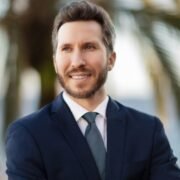

Alice is now working to translate that drive into action. That will mean relying on better human-relevant models first, rather than animal systems. This can be achieved by growing tissues from skin cells and other accessible sources, she says, and using those systems to generate better data, and building AI on top of a much stronger biological foundation. Once that infrastructure exists, more advanced possibilities become realistic, not speculative, she noted.
“This matters not only for longevity, but for resilience,” Alice says. “Better models, better data, and better tools can improve how we respond to disease, degeneration, and emerging biological threats,” she says.
That question became personal when a sudden family health crisis occurred. The experience forced Gilman to confront the distance between scientific possibility and what families can access when time matters.
“That changed the time horizon for me,” she says. “Questions about health and longer life stopped being abstract. I began asking why so much possibility still felt far away from the people who needed it most.”
Gilman is now translating that drive into work focused on stronger evidence as well as more scalable predictive biological research and better routes from early discovery to clinical application