
COP30: Monaco Presents New Climate Commitments for 2035
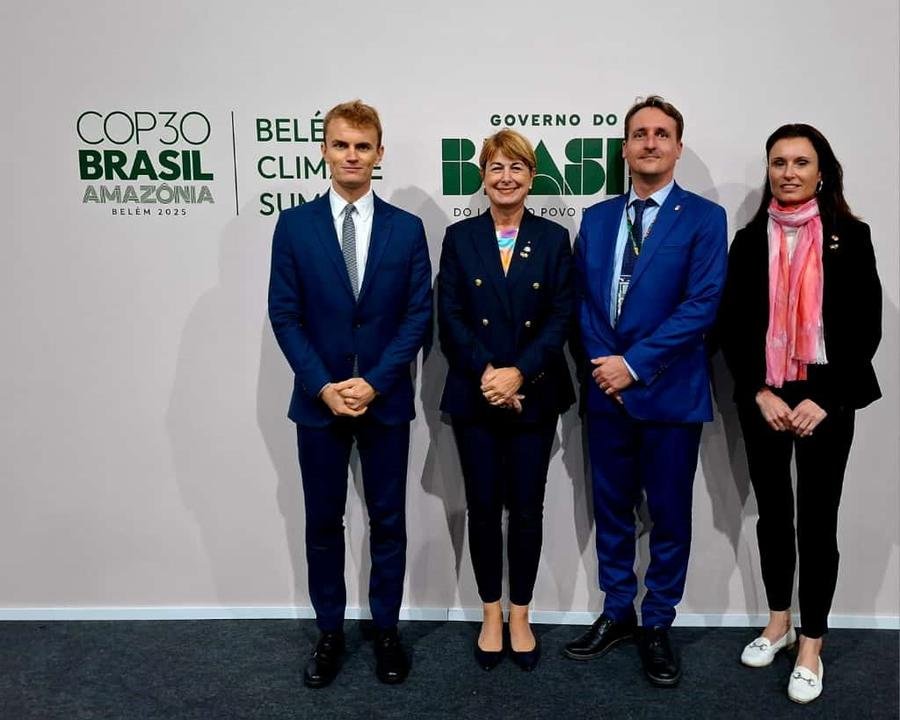
Ahead of the 30th United Nations Climate Change Conference (COP30), H.S.H. the Sovereign Prince travelled to Belém to take part in the Heads of State and Government Summit on 6 and 7 November, accompanied by Isabelle Berro-Amadeï, Minister of Foreign Affairs and Cooperation. During his address, H.S.H. Prince Albert II reaffirmed Monaco’s steadfast support for the Paris Agreement—adopted exactly ten years ago—and its overarching objective to limit global warming to 1.5°C. He also underscored the central role played by scientific research in guiding effective climate policy.
Throughout the summit, Monaco contributed to two thematic round-table sessions, using the platform to present the Principality’s main climate policies and newly adopted commitments in the lead-up to 2035.
Concrete Progress on Adaptation Indicators and Global Ambition
Following the high-level segment, a technical delegation from Monaco* participated in the COP30 negotiations, which concluded on 22 November. These talks culminated in the adoption of new scientific indicators designed to help assess how countries are adapting to climate change—an important step toward strengthening global monitoring frameworks.
Participants also urged States to raise the ambition of their national climate targets and agreed on the need to triple international financial support for developing countries’ adaptation policies.
Monaco and the ICBC: Advancing Decarbonisation in the Built Environment
During the conference, Monaco took part in the first ministerial meeting of the Intergovernmental Council for Buildings and Climate (ICBC), charged with implementing the Chaillot Declaration. The Principality joined the ICBC in July 2025, committing to intensified cooperation aimed at decarbonising the building sector and improving urban resilience worldwide.
The broader COP30 process also provided an opportunity for countries to present their new or updated climate commitments for 2035.
A New Climate Target for 2035
Monaco submitted its updated nationally determined contribution (NDC) in July 2025. The new goal calls for a 67.6% reduction in greenhouse-gas emissions by 2035, building on the earlier target of a 55% reduction by 2030. These commitments draw directly on the latest findings of the Intergovernmental Panel on Climate Change (IPCC) and are consistent with the trajectory necessary to limit warming to 1.5°C.
To achieve this, the Government will intensify efforts across the three sectors responsible for the majority of national emissions: buildings, transport, and waste. The Principality is already deploying ambitious measures to expand renewable energy, support energy-efficient construction, and scale up electric mobility.
Beyond these technical approaches, Monaco emphasises environmental quality and quality of life as core priorities driving its public policies. These initiatives reinforce ongoing efforts to reduce emissions, strengthen national resilience, and maintain the Principality’s attractiveness.
Ms Céline Caron-Dagioni, Minister of Public Works, the Environment and Urban Development, stated:


“Our climate trajectory has two objectives: to cut our emissions and to prepare the country so it can cope with future climate realities. This is the philosophy guiding our work on the future of Monaco: a country that delivers environmental excellence, whilst remaining resilient and maintaining high standards of quality of life and attractiveness.”
Strengthening International Solidarity
Monaco also confirmed its intention to increase support for developing countries as they accelerate their climate transitions. The Principality will double its climate funding by 2028, honouring the commitment made at COP29 in 2024.
Minister Isabelle Berro-Amadeï emphasised the ethical imperative of international cooperation:
“The Principality cannot limit its climate action to what happens within its own borders. Climate change affects all our societies. Above all, our support reflects a duty of solidarity and justice.”
Monaco’s climate strategy rests on a dual approach: sustained domestic action—anchored in the national objective of achieving carbon neutrality by 2050—paired with robust support for developing nations striving to meet their own climate goals.