
Yellow: Beyond Van Gogh’s Colour
“Colour expresses something in itself. One can’t do without it; one must make use of it.” — Vincent van Gogh, Letter No. 537 (Van Gogh Museum)
Throughout the centuries, our understanding of color has undergone a profound evolution: from perceiving it as a physical substance to treating it as a manifestation of light, and ultimately, as a subjective sensation born of the complex interplay between light, object, the eye, and the mind.
At the dawn of the 19th century, Goethe observed: “People, as a rule, experience immense pleasure from color. The eye requires it just as it requires light. One need only recall that refreshing sensation we feel when, on a cloudy day, the sun illuminates but a fragment of the landscape before us, revealing its colours.”
At the heart of his reflections lies the notion that yellow is among the most emotionally volatile of hues. In its purest form, it embodies sunlight, warmth, joy, and vital energy—standing as the color most akin to light itself. Yet, even the slightest infusion of blue or grey causes it to instantly forfeit its nobility. Goethe noted that such “sullied” yellow begins to evoke a sense of morbidity, becoming associated with envy, suspicion, and even a certain moral decay.
For the artists of that era, this volatility presented a formidable technical and aesthetic challenge: the smallest error in blending or a mere imperfection in the pigment could transform “radiance” into “dross,” fundamentally altering the emotional resonance of the entire canvas. This was a particularly daunting task given yellow’s status as one of the primordial pigments utilised in human expression.
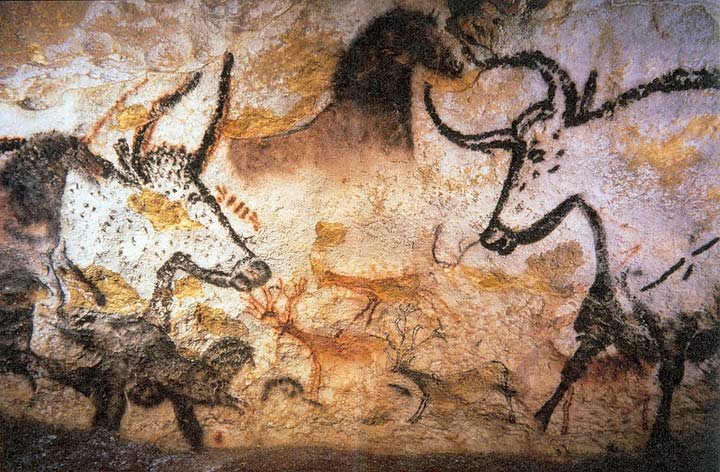
For tens of thousands of years, ocher from the earth coloured animal figures on the walls of the Lascaux caves. The toxic mineral orpiment shone with a golden gleam in the frescoes of Ancient Egypt and Rome. Meanwhile, in the cultures of India and China, the most exquisite fabrics, tinted with precious saffron, served as emblems of power and riches.
The historical perception of yellow is marked by profound contradictions and stark cultural contrasts. In many ancient societies, the color was intrinsically linked to the divine. In ancient Egypt and China, yellow was revered as a sacred hue, symbolising the sun, eternity, and supreme authority.
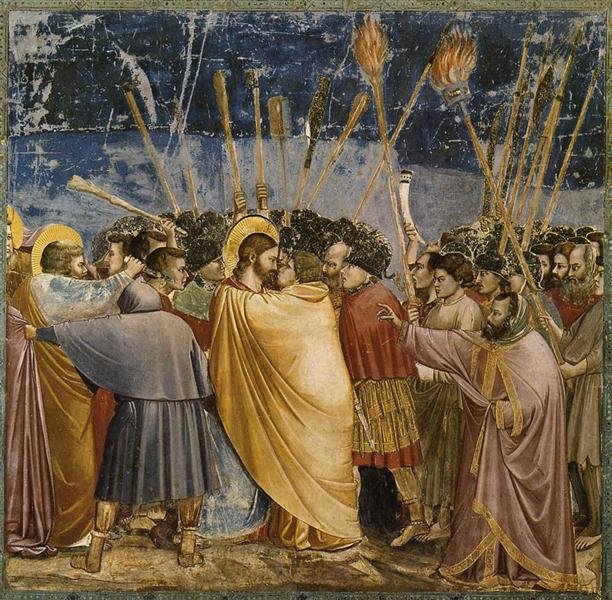
In China, this association was so absolute that for centuries, the right to wear vibrant yellow garments was reserved exclusively for the emperor. Conversely, in medieval Europe, yellow took on a starkly negative symbolism. Judas Iscariot was frequently portrayed in yellow robes—an artistic tradition that firmly cemented the color’s association with betrayal, envy, and deceit.
At the close of the 19th century, yellow emerged as an emblem of modernity, audacity, and decadence. Its shades permeated literature, avant-garde posters, fashion, and interior design alike.
Ramon Casas’s painting Decadent Young Woman (After the Dance) captures the profound exhaustion of the post-ball hours: the heavy drape of the black dress against the cool green of the sofa creates a palpable sense of weariness.
The heroine does not seek rest; she searches for meaning, sifting through fragments of the night or lingering over lines from a “forbidden” novel. In this image lies the very essence of Catalan Modernism. It is a portrait of an entire generation of bourgeois youth: cosmopolitan, elegant, and demonstratively detached from antiquated moral dogmas. Her languor is not a sign of weakness, but a new form of freedom—a manifesto of a woman who asserts her right to choose her own books, her own nights, and her own sorrow.
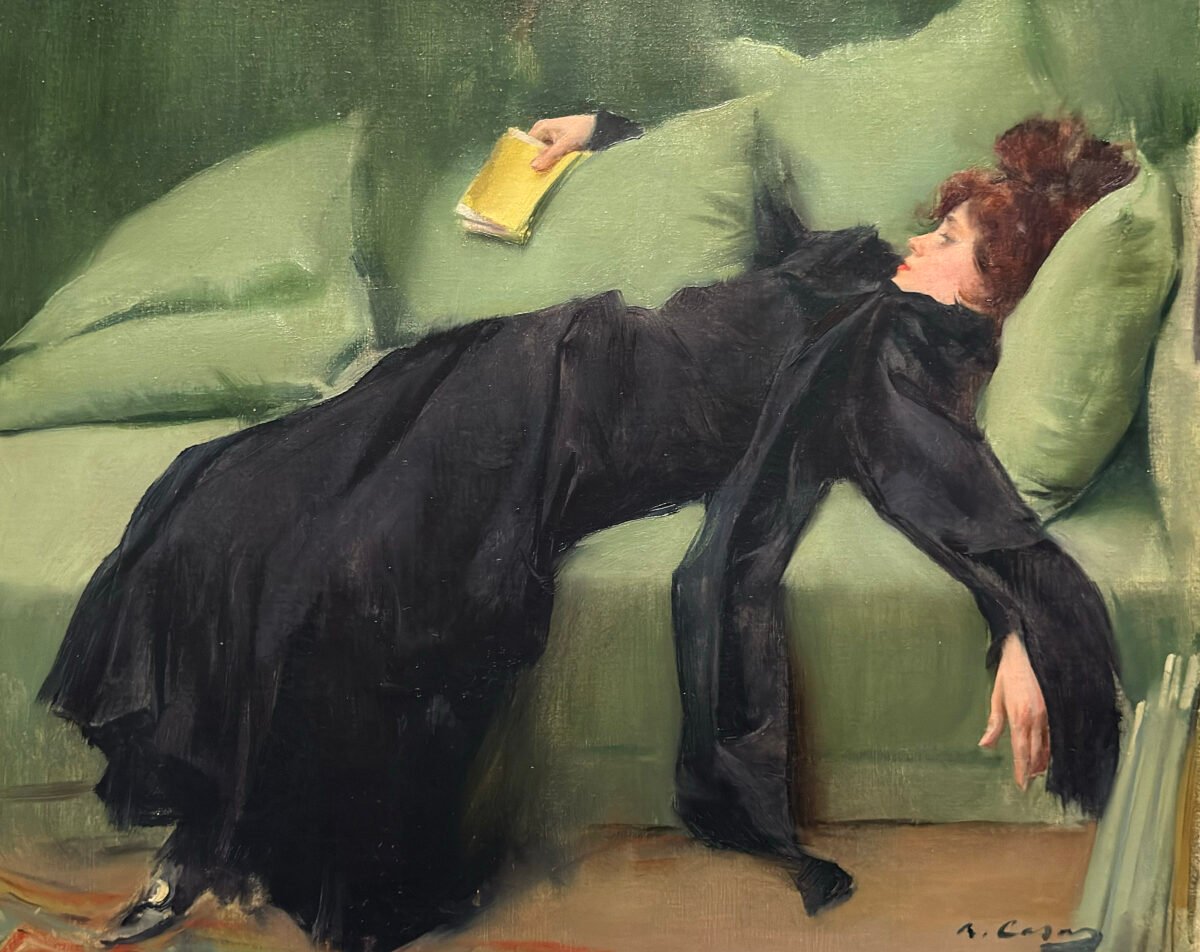
The heroine holds a yellow-covered book, a detail that serves as a potent symbol of social defiance. During Casas’s era, yellow covers were the hallmark of modern French prose—literature often dismissed as “dubious” or decadent by polite society. This single accessory transforms a conventional portrait into a manifesto of emancipation, signalling the woman’s intellectual independence and her disregard for conservative censure.
Yellow. Beyond Van Gogh’s Colour is an exhibition at the Van Gogh Museum in Amsterdam that explores the significance of the colour yellow for Vincent van Gogh and the artists of his era.
What sets this exhibition apart is the journey it offers—a global tour through renowned museums from London to Paris, Berlin, and Solothurn. By forging a bold dialogue between the canvases of the Dutch master and the works of contemporary and historical peers, the exhibition presents yellow not merely as a pigment, but as a spiritual quest for absolute light. This sensory experience culminates in a site-specific installation by Olafur Eliasson, while a musical dimension is added through compositions by students of the Amsterdam Conservatory, who transform painterly imagery into a living symphony of sound.
One of the first works to greet visitors is a painting by J.M.W. Turner. Much like Van Gogh, Turner adored and idolised the sun. Works from this period, such as Venice, Evening, Going to the Ball (c. 1845), are distinguished by their ethereal lightness, luminous atmosphere, and soft, blurred contours.
Critics of the early 1840s, accustomed to the more rigid and somber tones of classical painting, frequently accused Turner of an excessive reliance on yellow. They mockingly employed “culinary” metaphors to describe his style: his later Venetian canvases were derided as “a mixture of orange-peel and currant jelly” or “a set of poached eggs in mustard,” as critics struggled to accept his thick impasto and daring use of yellow pigments.
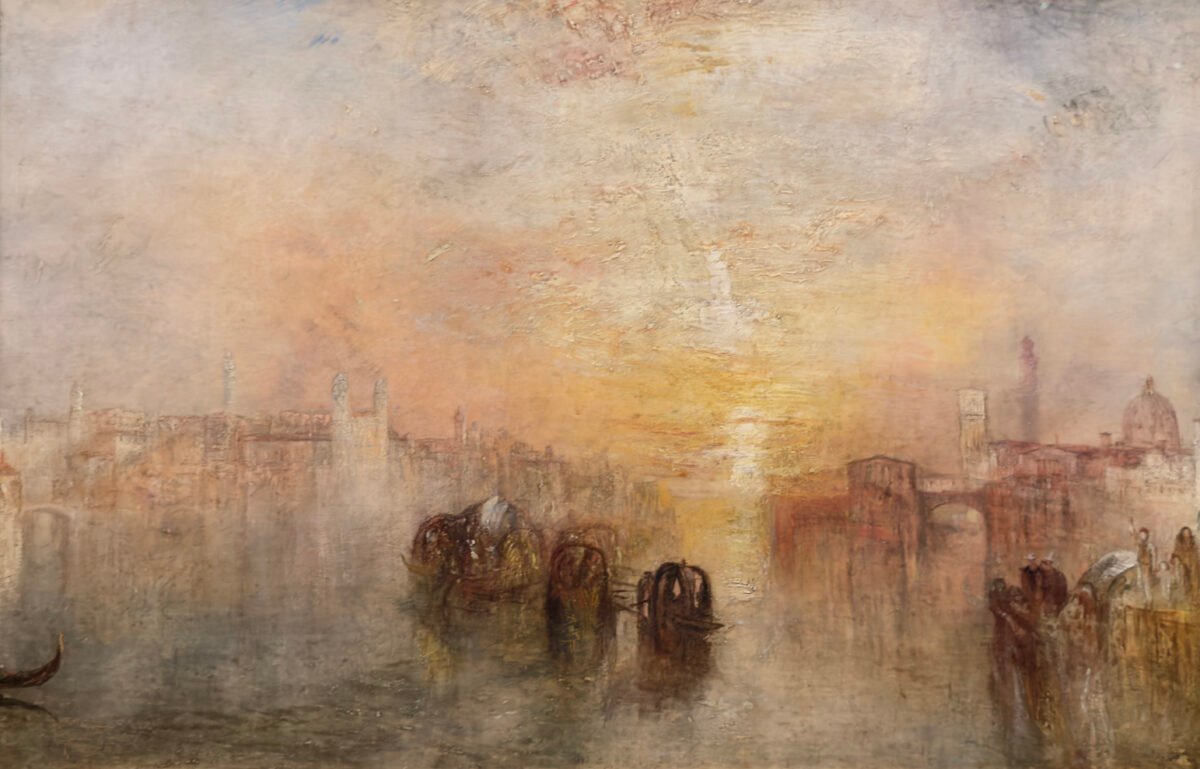
In the exhibition, the work of J.M.W. Turner serves as the starting point and historical foundation. He made the color yellow and pure sunlight the main protagonists of his canvases, exploring their expressive potential decades before the Impressionists and Van Gogh.
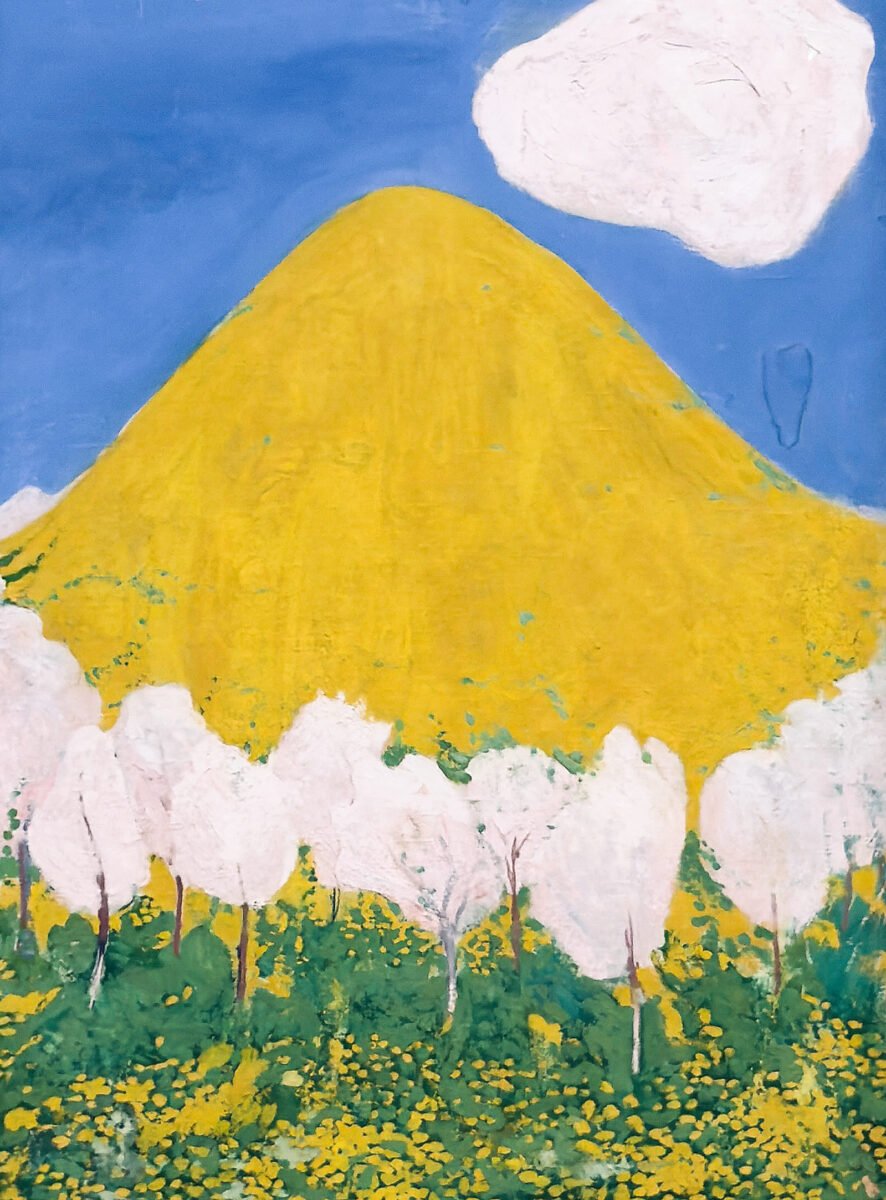
A particularly notable inclusion is the work of Cuno Amiet, one of Switzerland’s most significant modernist painters. His masterpiece Der gelbe Hügel (The Yellow Hill) serves as a brilliant testament to his contribution to early 20th-century European art.


This painting holds a central place in the master’s legacy, signalling the triumphant transition of Swiss national art into the avant-garde movements of the new century. In a bold rejection of traditional descriptiveness, Amiet replaces figurative precision with raw chromatic expression. The canvas becomes a conduit for “pure light,” where the simplification of form serves only to intensify the emotional charge and inner dynamism of the image.
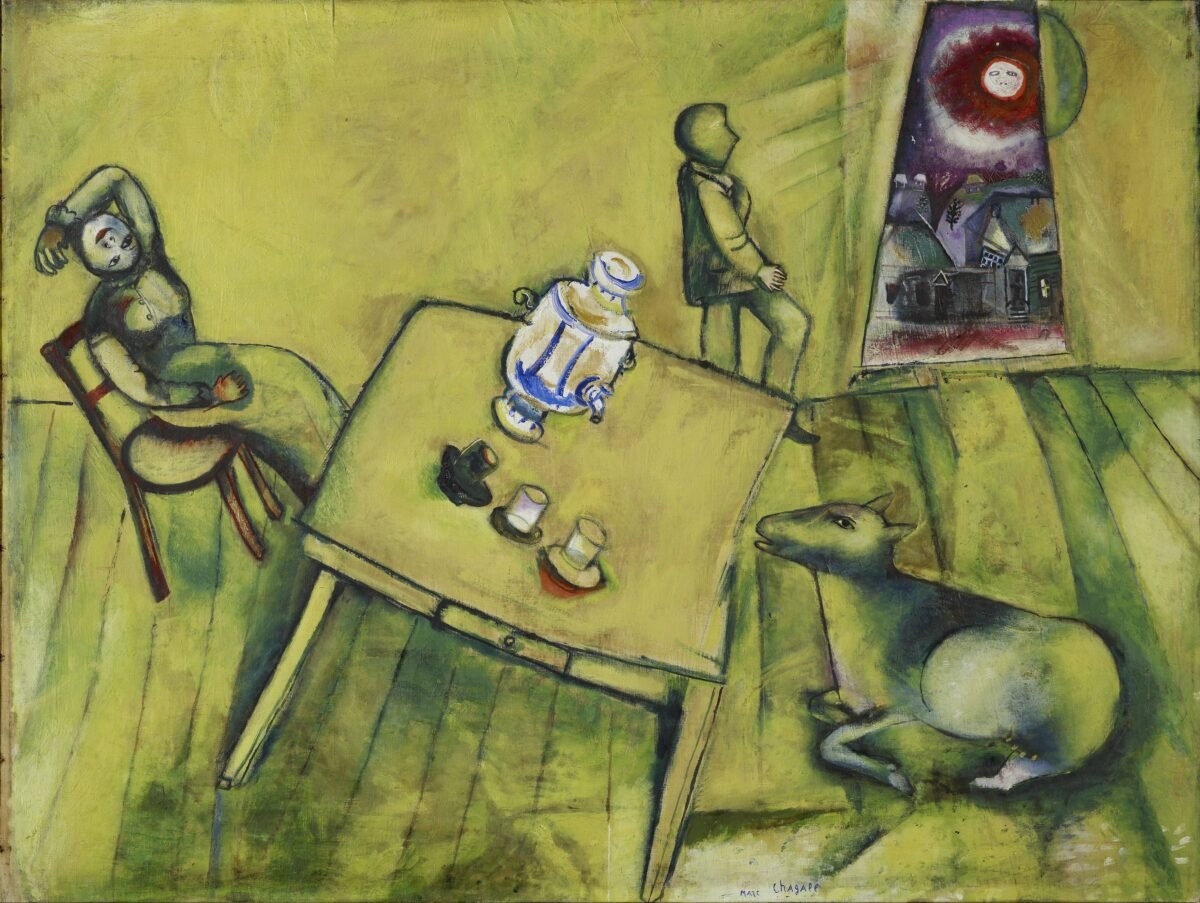
A particular delight of the exhibition is Marc Chagall’s 1911 painting The Yellow Room. Here, the color yellow does not merely tint the walls; it floods the entire space, becoming a living, pulsating presence. Having just moved to Paris, Chagall envisioned this room not as a specific location in the city, but as an “inner Vitebsk”—a recreation of the warmth and security of his homeland. The yellow glow of the interior transforms the mundane into the magical.
The objects on the table—a childhood samovar and familiar domestic utensils—serve as anchors of memory. For Chagall, these fragments of Jewish life brought from Vitebsk are more than a simple still life; they are the foundation of a personal cosmos where even the most ordinary gesture feels sacred. The window acts as a vital accent, turning the room into an open system through which a stream of irrational light enters. This aperture introduces a vertical axis of eternity: while the figures are immersed in their earthly rituals, the window offers a passage into a spiritual dimension.
Van Gogh truly discovered the power of yellow while seeking out the brilliant light and sun-drenched warmth of Arles, drawing inspiration from the serene tranquility of provincial life. He ventured to the South of France in hopes of finding a more luminous palette for his work. After the somber, grey tones of his time in Holland and the relatively restrained palette of Paris, the sun finally began to radiate from his canvases.
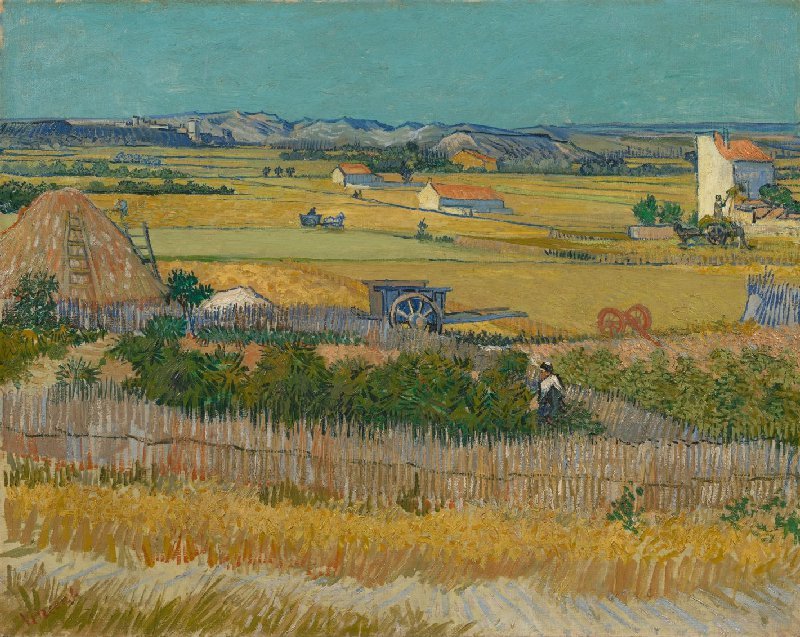
He was literally dazzled by the landscape, saturated with color. The vast fields, filled with fresh greenery, faded toward the horizon, where they met the deep azure of the sky.
In Arles, Van Gogh arrived at a profound, almost tangible conviction: color could speak for itself. Striving to manifest this truth, he approached his palette with a sense of defiant freedom, seeking that precise harmony which might express the love of two souls through the union of complementary colours—their blending, their opposition, and the mysterious vibrations of kindred tones. In pursuit of these electric combinations, he painted the landscapes of southern France day after day. One of the pinnacles of this quest was Sunflowers—a series of canvases in which the sheer intensity of the Arlesian light is concentrated. Vincent painted these flowers repeatedly to decorate the walls of his “Yellow House,” and in each study, one feels the pulse of his passion: for color that lives, for light that breathes, and for a simplicity that ascends to the level of revelation.
During the fifteen months he spent in the South of France—from February 1888 to May 1889—Van Gogh produced over 200 canvases and countless drawings. Yet, this prolific output exacted a devastating toll; he reached a state of total moral and physical exhaustion. While his time under the Arles sun established him as an undeniable master of the art world, he would live for only one more year after the period drew to a close.
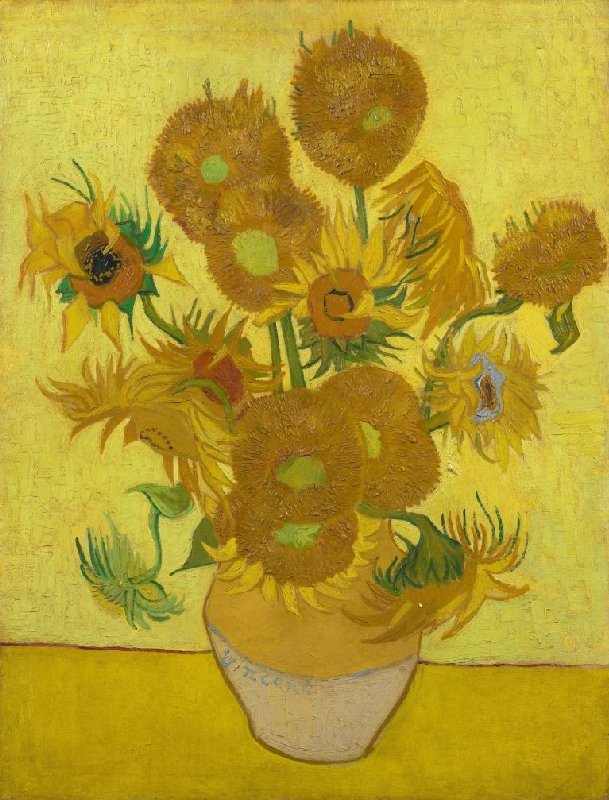
As for yellow, its expansion within contemporary art remains unabated: moving from minimalist abstract planes to the shimmering glow of digital canvases. It has ceased to be merely ‘paint’ and has transformed into a dynamic energy that dictates its own terms within an ever-shifting artistic landscape. Its power lies in its ability to penetrate deep into the human psyche, bypassing logic altogether. Whether appearing as a dazzling flash of nature or a complex symbol of cultural identity, yellow remains the primary conduit for light and clarity. In the hands of masters, this color truly comes alive, transforming a static image into a pulsating medium where every shade represents a quest for absolute expression.