
Artificial Intelligence – the Revolution of the Fashion World?

Since OpenAI made its text generator ChatGPT available to all, the general public has become acquainted with the topic of artificial intelligence (AI), the questions raised by its future applications and its potential impact on various industries, including fashion. These are indeed expected to alter countless aspects of our daily life in the coming years. But also – and perhaps most notably – many predict that they will profoundly shake up the economy.
The recent Fashion Weeks showcased this intersection, where AI’s growing role in fashion design and conceptualization was vividly displayed by the biggest brands.
Is the future of fashion in the hands of the new technological tools capable of processing massive amounts of data and generating impressively realistic images in the blink of an eye? While they clearly open up a vastly expanded realm of possibilities, they also pose numerous questions regarding artistic creation. The haute couture shows in Paris reflected this shift, with designers like Schiaparelli’s Daniel Roseberry exploring the fusion of fashion and pre-internet technology, hinting at an AI-driven future. Is this the future, one would ask? Well, it seems there’s no return, gone this far.
Fashion and Artificial Intelligence: A New Era of Enthusiasm
A captivating blend of heritage and innovation pushes the boundaries of traditional haute couture, while the enthusiasm for AI in the fashion industry is increasingly evident. Its role in design offers new techniques and audience engagement strategies. The recent events during Paris Haute Couture Week Sping/Summer 2024 were a demonstration of the new approach, with designers like Pieter Mulier at Alaïa showcasing unique yarn development and Chanel’s Virginie Viard presenting a collection inspired by balletcore, blending AI and traditional design methods. The integration was seen also in Schiaparelli’s innovative use of a robot baby and Dior’s client-centric approach, indicating a growing trend towards blending digital innovation with traditional craftsmanship, where practicality and client engagement are key focuses.
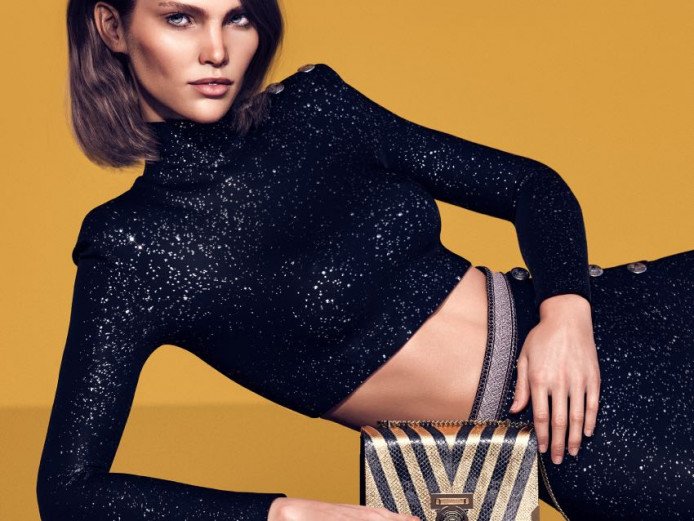
Among young creators and stylists the fervour is even higher, as the possibilities offered by AI seem to be endless and the will to experiment is pushing boundaries. Last Spring the first Fashion Week entirely realized with the help of AI software took place in New York. No models walked the runway, nor were there decors or photographers, nor major houses like Louis Vuitton or Dior: everything was entirely virtual, generated from A to Z with the help of new technologies. But does it have the same appeal of a real world tangible collection presentation? And in terms of practical applications, where’s the win?
The forwards thinking house of Balmain is redefining the fashion industry by using 100% virtual models for its “Virtual Army” campaign, blurring the lines and boundaries between the real and virtual worlds. The brand is also involved in the production of NFTs and virtual showrooms, to demonstrate an ambitious desire to stay ahead of times.
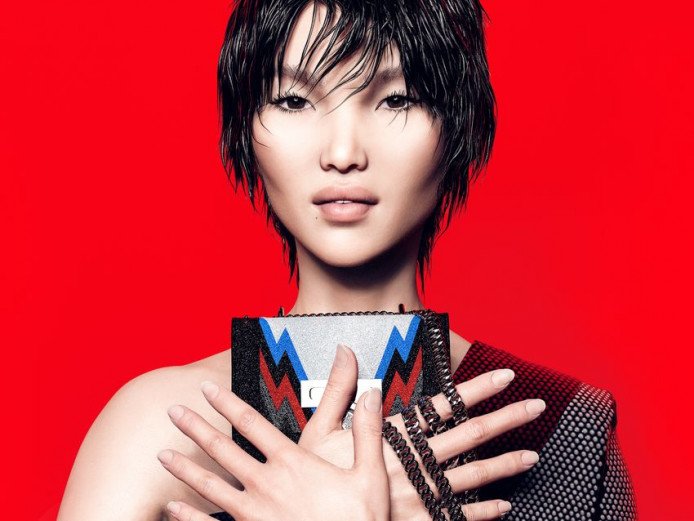
The luxury men’s fashion brand Zegna recently unveiled an update to its ZegnaX system, including artificial intelligence. The system allows personalizing the shopping experience,
giving clients the ability to view 360° clothing combinations offered, or even to purchase tailor-made garments. Zegna also uses AI for its data analysis and customer service. The company has expressed its commitment to explore different ways to integrate AI innovations into the fashion world.
Talking about the mass market, H&M group’s Creator Studio announced recently the creation of a new tool for textile printing of images generated by AI. Customers can use images they generate themselves via this tool to customize the garments of their choice and have them delivered on demand. In a statement, Dinesh Nayar, the CEO of the company, affirmed: “Our mission at Creator Studio is to allow every creator to express themselves through derivative products. Finding new ways to eliminate the obstacles that prevent our clients from creating content is what we relentlessly explore. Integrating a tool for creating works of art via AI is a natural step in this process.”
In the evergreen blue jeans domain, Levi’s is committed to the field of AI-generated models to improve its diversity and inclusion. Through this initiative, the brand wants to showcase a broad spectrum of ages, skin colors, body shapes, and sizes.
Another eloquent example: ChatGPT scripts for Marc Jacobs. In New York, the designer’s collection showcased the use of AI to write the booklet of the catwalk, which contained inspiration sources of different designers. Entirely written by OpenAI’s language model ChatGPT, in a tone without great originality, vague in nature and ultimately applicable to any collection, the experiment intended to sarcastically question the application of new tech in the fashion world.
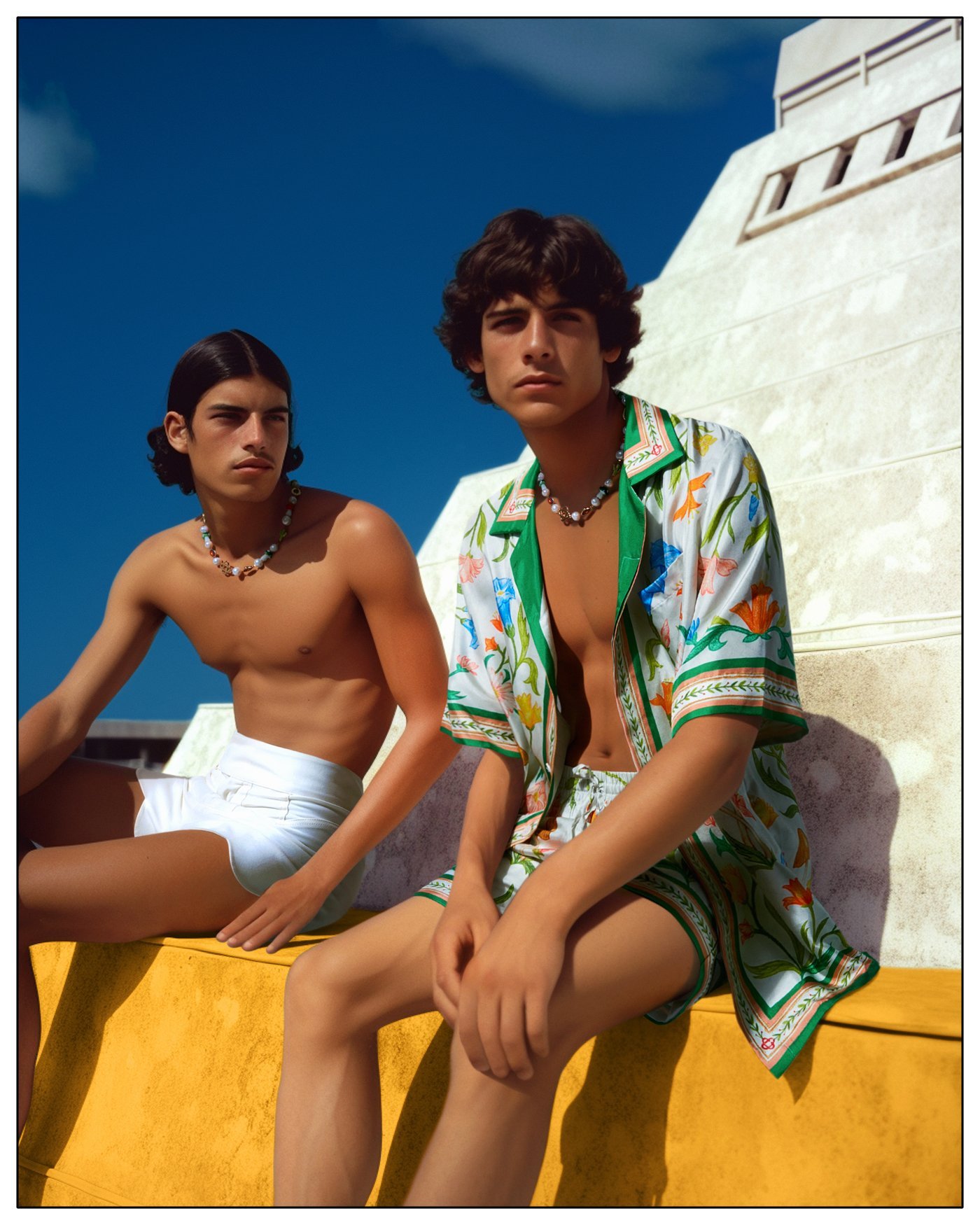
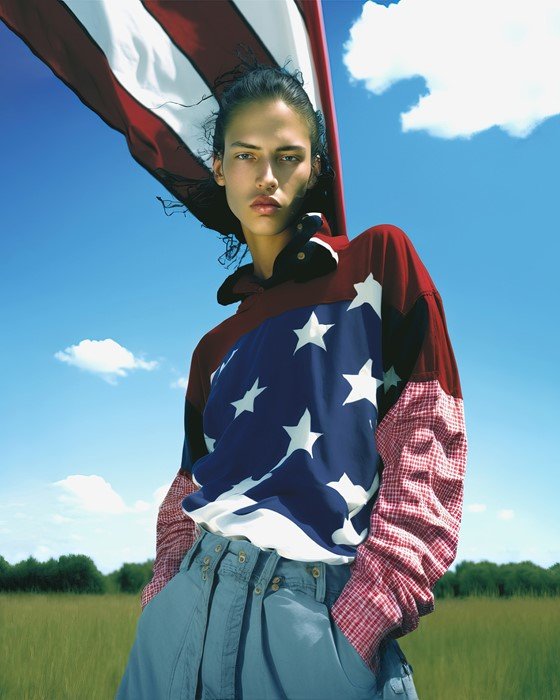
But some young fashion houses do not hesitate to go further. This is the case of the sporty-chic house Casablanca, founded by Charaf Tajer in 2018. The house entirely designed its Spring-Summer 2023 collection using artificial intelligence that generates images, albeit in collaboration with British photographer and artist Luke Nugent.
The launch of the campaign named “Futuro Optimisto”, with a decidedly retro-futuristic aesthetic, was a celebration of technological innovation. No decors or models, the images of the campaign were the fruit of a couple prompt inputs.
Counterfeits: AI Fight Against The Scourge
Major brands and retailers are increasingly looking to exploit artificial intelligence, especially their authentication systems, to combat fraud and counterfeiting – which represent a multi billion market yearly.
The LVMH group, owned by the ingenious Bernard Arnault, once again leads the way by equipping the brand Patou with an anti-fraud application, in partnership with the company Ordre. The process begins at the start of the production chain: each product is equipped with a chip that allows controlling its circulation and, therefore, avoiding fraud, especially the return fraud when fakes are sent back instead of the authentic garments. The authentication system named “Authentique Verify” allows clients to scan a digital fingerprint on a product to verify its authenticity.
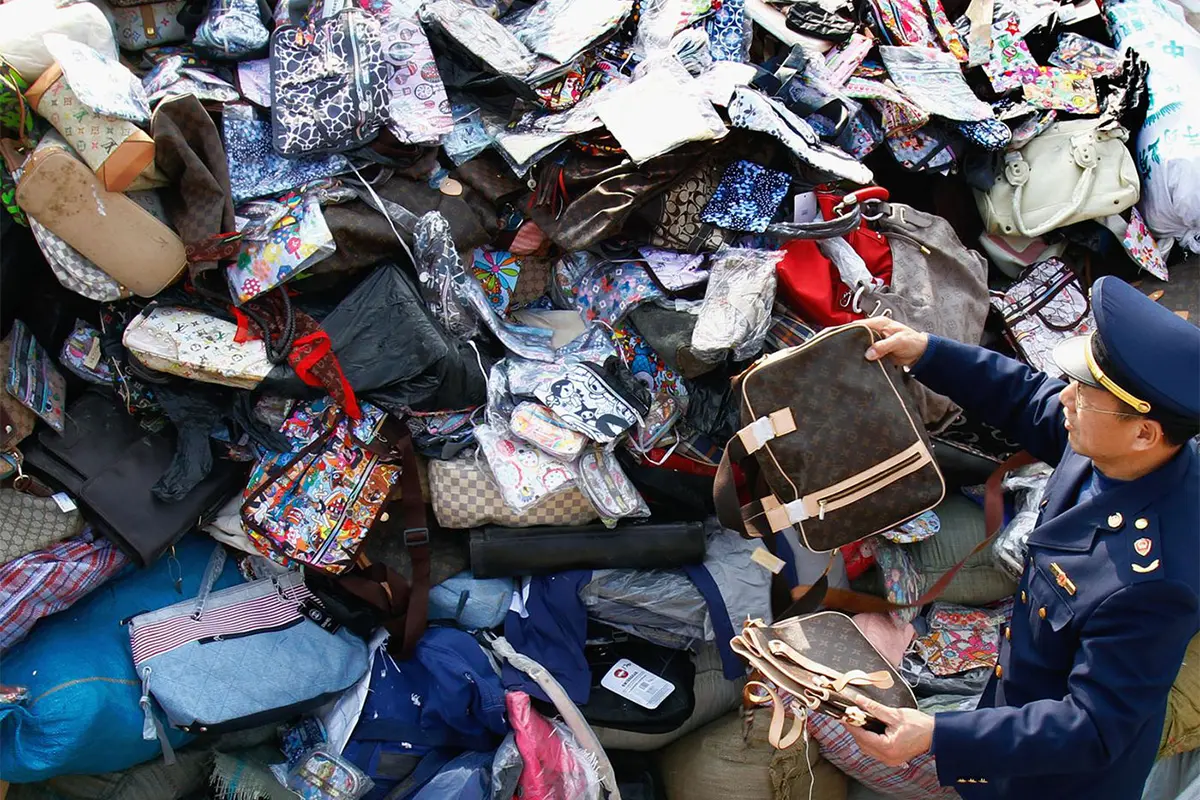
Educating the public about fakes is a key factor. When customers turns to be a true aficionado of a brand’s universe, developing an affinity, they are less likely to seek out fakes. This is the reason why LVMH aims to achieve a customer experience that makes a difference, improving and personalizing the services as much as possible.
A New Wave of Adoption: Economic Indicators and Growing AI Skills
The figures, at the end of the day, walk the talk. The share of AI in the market of the fashion industry has experienced a significant increase between 2022 and 2024, thus raising from 650 million to 910 million dollars.
Romain Chaumais, CEO of Fashion Data – a startup dedicated to assisting fashion players towards a “zero waste” market – believes that the AI market in the field will exceed one billion by the end of this year.
This increase, for Paul Mouginot, entrepreneur and artist, is the result of a two-stage adoption of AI by creators and major brands in the fashion world. In the first wave, between 2013 and 2018, the algorithms started showing up and slowly become more accessible. Today, we are in the midst of a second wave, fuelled by interfaces much easier to use for the general public, and whose skills are expanding.
It’s no longer just about language models like ChatGPT, capable of generating texts, or applications like Midjourney or DALL-E, capable of generating images, but rather technologies touching all areas and intersections of fashion. For example, the AiDa platform, created by academics from Hong Kong, is a protean aid tool for designers and stylists, a real multitask assistant.
Conceived by Professor Calvin Wong and Dr. Aemika Zou, as well as their research team, it allows, among other things, to upload drafts, materials and color palettes on a virtual mood board, and the software algorithm generates designs that stylists can then modify, adding details, accessories, changing colors, or modelling in a certain style. The system is capable of producing dozens of different models in a few seconds.
Stylist Mountain Yam has been using AiDa for almost a year now and describes his relationship with this technology: “Our relationship is like a love affair. I gradually got to know her. Following my lines, my styles, and my databases, the system offered me alternatives that I might never have considered.”
Kim Wong – the co-creator of the startup Code-Create, which launched AiDa – affirms that the mission of this new platform is to “revitalize the fashion ecosystem thanks to artificial intelligence. AiDa allows accelerating the creation process, saving more than 60% of the time spent on inspiration and model development.”
Field Skjellerup, the New Zealand stylist, creates entirely virtual garments daily – since they are never actually produced materially – and then publishes them on his Instagram account.
These creations are so realistically striking that many users believe they are dealing with real products, to the point where there’s a surging demand to buy the items. Skjellerup states that working with artificial intelligences allows for a more collaborative approach to creation: “You have to transmit information, wait for the generated image and react
accordingly. Even if I have an initial idea, the result can be completely different depending on how the AI responds. I really like the sense of mystery that surrounds these tools.”
Intellectual Property Rights: the Risks
An event raising questions was the collection launched by the american brand Collina Strada, presented last September. The founder Hillary Taymour claimed to have created the new drop with the help of the artificial intelligence Midjourney, by using visuals of archive collections and designs, and refining them before submitting again the results to the AI in order to train the model to take into account the brand’s preferences and orientations.
Whether one likes it or not, the boundaries between pure creation coming from human brain and inspiration suggested with the help of algorithms are becoming increasingly blurred. Thus, for Rebecca Lewin, curator at the Design Museum in London, AI will inevitably pose problems around questions of intellectual property on one side, and freedom of creation and inspiration on the other – and it will take some time before all this will be well regulated.
Paul Mouginot believes that AIs are not a threat to human creation and that it will never be completely automated. The human remains at the heart of it, but we must expect a new hybridization. As he explains: “The future is hybridity. For example, a campaign shot physically, but which would integrate sets whose shapes have been generated by AI.” This ping-pong between machine and human will allow for the creation of rich and new images. Fractal production studios are already making every fantasy come into reality, by generating visually superior scenographies.
Reading the Future: The Many Promises of AI
Beyond artistic questions, the adoption of AI in the fashion industry holds many economic promises. When we talk about fashion, we talk about a world in constant renewal. Trends constantly bifurcate, fluctuate, and take sometimes surprising turns.


For brands, faced with the constantly changing unpredictability, the goal is to be up to date on all fronts and to foresee market evolutions as best as possible. AI gives rise to many hopes, by opening an era of data analysis on a massive scale, previously unthinkable, as it could eventually even allow to better discern future trends.
Concretely, relying on algorithms, AI can probe the entirety of the data provided, as well as those constantly produced by the web as a whole: social networks, news feeds, press articles, images, videos, but also statistics from online store sales, etc. From this vast mass of information, the patterns and recurrences can be extracted. If traditionally the evaluation of fashion trends relied mainly on the intuition and experience of creators, now this role is in the hands of prediction agencies, which rely on AI analysis tools and offer their services to major houses.
The French platform Heuritech, which opened in the United States in 2019 after a fundraising of 4 million euros, is one of these agencies. Having since partnered with Pantone, the global color specialist company, it analyzes and retrieves data posted on social networks – mainly Instagram and its Chinese counterpart Weibo –, representing 3 million images each day, in order to indicate to brands the current trends, as well as those rising and those weakening, over the next 6 to 12 months. Its services have already seduced prestigious clients like Louis Vuitton and Dior, and the platform plans of expansion are limitless.
Ecological Impact of Fashion: Can AI Have a Positive Influence?
A better prediction of trends, in addition to being a competitive economic advantage, is also a way to lower the percentage of unsold goods. And reducing unsold stocks is having a positive influence on the environment.
The ecological impact and carbon footprint are the Achilles’ heels of the textile and fashion industry, for a long time ignored, but which are now coming back to the forefront. According to data from the Global Fashion Agenda and McKinsey & Company, the clothing and footwear industry is responsible for at least 4% of CO2 emissions. A figure that AI could nevertheless help reduce.
Overproduction and unsold goods are major problems for these industries, and better predictions of upcoming trends could allow major brands to adjust their production more precisely and stick as closely as possible to market fluctuations.
Another role that AI is playing is improving the production and supply chain of the textile industry. An essential challenge to master. From the use of raw materials to delivery, through inventory management, each step can have an impact on the environment. Here, AI is used to analyze the different logistical means to ensure that each product is delivered in the most efficient and ecological way possible.
Behind all these seemingly immaterial analysis tools, in reality, lie numerous highly energy-consuming infrastructures: data centers, server farms, which generate a lot of heat and therefore need to be constantly cooled, and therefore have a significant impact on the environment.
AI gives rise to many promises, but we must not forget to question the costs all this entails, nor be blinded to the environmental and ethical issues it raises, particularly regarding the use of personal data.
A Personalized Customer Experience
Personalizing the customer experience is one of the major orientations that the fashion industry is taking. In the era of e-commerce, it has become a powerful and necessary tool for retailers, based on clients’ consumption habits, the purchase history, the tastes and browsing habits. AI can now optimize results and lead customers to greater satisfaction regarding the products they choose.
The company Perfect Corp offers clients to test their products in a unique way through hyper-realistic visuals developed by artificial intelligence. Consumers can thus test products using virtual fitting, all without stepping a foot outside. The application then collects the data produced by the users to offer them recommendations in line with their desires.

As Alice Chang, CEO of Perfect Corp, states: “Fashion brands can offer customers personalized shopping experiences that increase their satisfaction while reducing product returns. These solutions also promote more sustainable business operations, allowing brands to achieve their ESG ( environmental, social, and governance) goals by reducing the excess waste and emissions generated by the product sampling and return processes.”
Adapting to Transformations: a Future Shaped by AI and Human Creativity
AI has set foot in the fashion industry, and it’s here to stay.
The integration of new tech in fashion, as mirrored in last week’s Paris Haute Couture themes, presents a captivating blend of heritage and innovation, pushing the boundaries of traditional ways of operating.
These changes hint at a future where human creativity and machines coexist, offering a richer, more inclusive, and technologically advanced landscape for both artists and consumers.
The key word for fashion will be adaptation. Each actor in the field must expect a decade marked by the influence of these new technologies. It will be necessary to show perspicacity, goodwill, imagination, and audacity to adapt to these transformations, which will inevitably occur as artificial intelligence becomes more versatile and its use more widespread.