
Legends Unite: Inside the Making of ‘Killers of the Flower Moon’ with DiCaprio, Scorsese, and De Niro
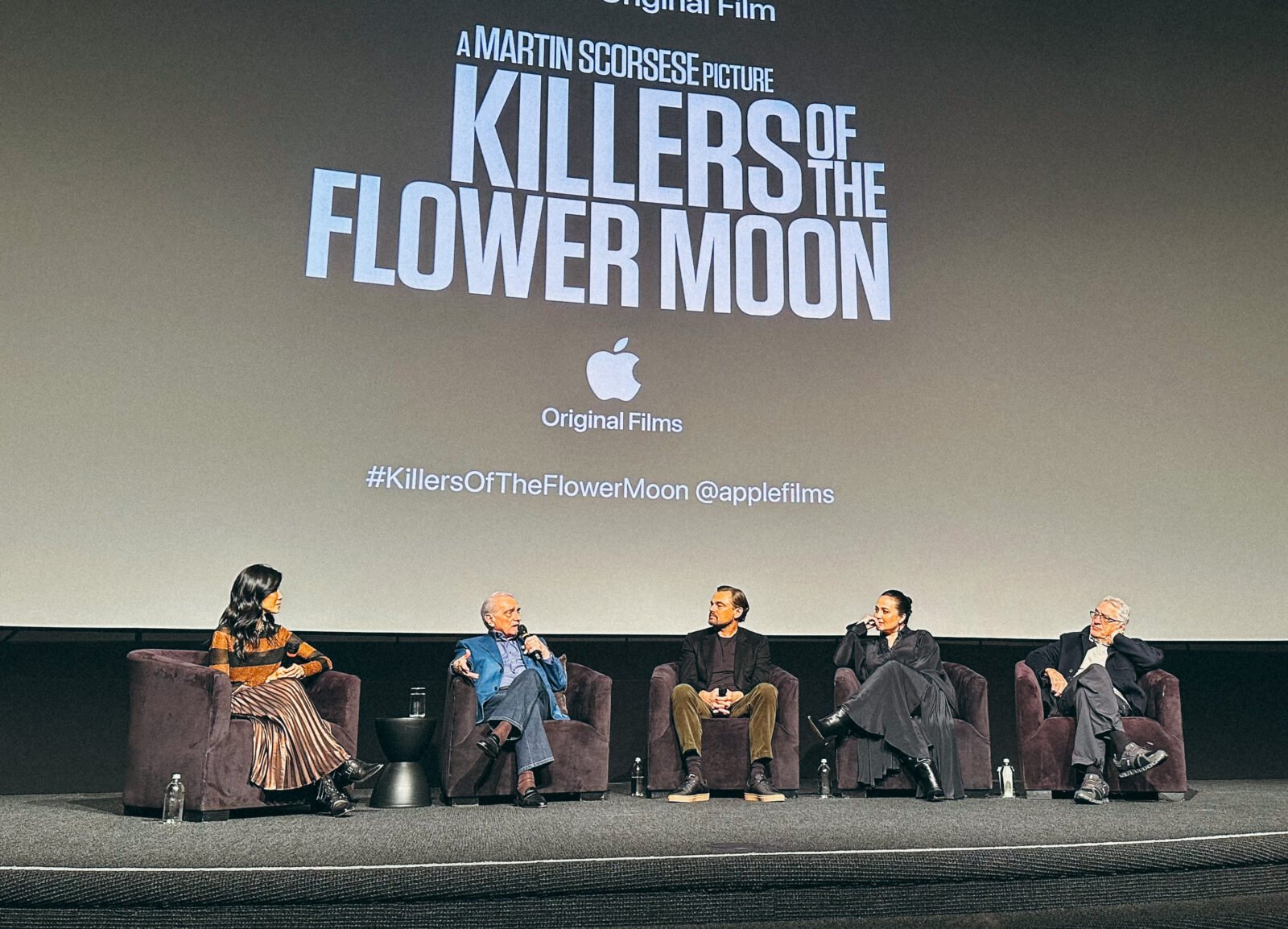
In this interview, we dive into “Killers of the Flower Moon,” a landmark collaboration between Leonardo DiCaprio, Martin Scorsese, and Robert De Niro. This film, set against the backdrop of the Osage murders, marks the first time these three icons have come together, blending their unparalleled talents. With insights from the cast and crew, we explore the making of a movie that not only highlights a significant historical event but also showcases the power of storytelling. Join us as we uncover the passion, challenges, and artistic synergy behind this anticipated project.
Before we get into the film, Martin, Leo, and Robert, this is the first time that the three of you have collaborated together on a project. What was it like, and was there anything surprising about the experience?
ROBERT: It’s funny, but we sort of continued the relationship we had with each other. But it felt good to finally be able to work together after all these years.
LEO: This frankly meant a great deal to me. I’ll say it as many times as I can. This man to my left here, believed in me and helped cast me for my first starring role in This Boy’s Life. Now, we got to do another film together. Here we are, literally thirty years after Bob saying to Marty “You should check this kid out.” When I was just sixteen, I got to do so many incredible films with Marty. They, in a lot of ways, both have been mentors and also cinematic father figures to me. To have this great concentric circle, years later with both of them, means a lot. This was one of the most memorable collaborations that I think the three of us had, and I’m very proud to be part of it.
MARTIN: Bob and I have been working together since 1972. The odd thing for me is that you introduced me to Leo and then something happened. There was this flurry of like twenty years and there were all these movies and people and it’s almost as if we had already been acting together in a way. It all just came together, whether it was “The Irishman” first, or “Killers of the Flower Moon” first, somehow it all seemed very natural that the three of us had suddenly looked around and realized- “Oh, the three of us are together.” Really, it’s always been that way because of events and things that kept us together. It seems like some sort of a train ride, it just keeps going and suddenly you look back and thirty years have gone by. So, for us to be on the set together,it was very natural.
Lily, you received this round of applause because you were just sensational in this film. But, how was it like to work alongside these titans of film.
LILY: I’ve had the best seat in the house on this collaboration. Honestly, I’m still pinching myself. It’s such a gift, being the new kid in this dynamic, to walk into something that’s so established. I found that it was something I couldn’t think about too much. There were a couple of moments when we started working together, and finding our dynamic, where they would kind of tease me that this is real, and I’d be like, shut up, shut up, I can’t think about it. The very first scene we did, my hands were just completely shaking, but I thought I was good. Then I got in front of Bob, and I was just not good. At a certain point, you sober up and realize that you’re all here to tell the story you all care about. To be too meek, or too humble about it, or too intimidated by it, is doing a disservice to these titans. Who are also just incredible human beings, and so committed to a story that generations of film have been marginalizing, putting out of focus, and putting in the sidelines. They all were so open, and had a seat at the table for me. It was like, what are you bringing to dinner? You know? I had three months before I ever got to the point of being comfortable and tried to not be in my head too much.
Martin, you have taken us to explore the depths of so many aspects of American culture. Why did you have to tell the story of the Osage and the Osage murders right now? Why were you so compelled to tell this story?
MARTIN: I don’t know if I knew this was exactly the right time to tell it. It just seemed to all come together this way at this time. But it did start with me back in a project I was involved with a few months back in 74. I found myself on the Pine Ridge Reservation in Dakota. I was only thirty years old, and so I had this naivete ignorance. What I encountered was so traumatic to me. I can’t categorize what it was. You can’t just say “Oh this is what happened to these people.” There is no category for it, and that awakened me in a way. I was also never a person to suddenly make films that made headlines of that time. I just sensed that somehow I needed to get myself involved in a situation where I could express what I felt when I was there at Pine Ridge, and for the Indigenous people, and for ourselves too, the white Europeans. I had to figure out a way to go about it, not just about authenticity. Authenticity was going to be hard enough, but there’s got to be a truth we have to find here. But then right before COVID hit, I had the chance to visit Oklahoma twice. The second visit there was a dinner at the Osage, and that night is when I understood that we have to go deeper because that night, I saw the face of the Osage. They had faces, they had voices. That night I knew what I wanted to say. We have a story here that’s about love and betrayal, trust and betrayal, but truly a love story. It then took another year and a half before we started shooting, we had that COVID period to work it out. So those are the elements that came together.


There is this effort underway to teach kids the Osage language. Because it’s a language that is in danger of going extinct. Yet there’s so much of the Osage language spoken in this film. How did that come about? And Robert, what did it feel like to speak Osage? What did it feel like for all of you, this new Osage?
ROBERT: Well, it was. I had no idea how the language would sound, and I just knew if I let it be whatever it would be, it would be nothing, because it was something I was totally alien in doing. So, I started learning it with this young man, Chris. It was terrific. I practiced a lot because I wanted it to be so second nature, you know? It was just a lot of practice. It’s simple.
What an astounding character Ernest Burkhart was. There’s this fierce debate about whether he really loved Mollie. Based on the research that you did, and the interactions that you had with their descendants, do you believe that he really loved Mollie?
LEO: I listened to what the Osage community told me. Multitude of them came up to me and said remember- “That- was a real marriage.” He really loved her. It’s shocking because you read the book and think how could you know somebody that is still so filled with deception and could do this to his own family? It brought us on this journey to creating an unreliable protagonist wherein, we didn’t even know how complicit he really was while we were filming. How much information he knew, what he was withholding from her? We kept developing this relationship as it went on and it became more and more powerful and I think the connection between the both of us became more and more powerful. I got to speak to the direct descendants of my character, the niece of Ernest Burkhart, a 13 year old young girl who wanted to ask her uncle about the murders and waited until Christmas time when he was drunk. She got him to admit certain things to her. I mean this story is so sensitive, it is so fresh and it still affects generations of people in that place. It is truly amazing to have the ability to go there and talk to people that are still on those lands, that are the direct relatives that are still affected by what happened.