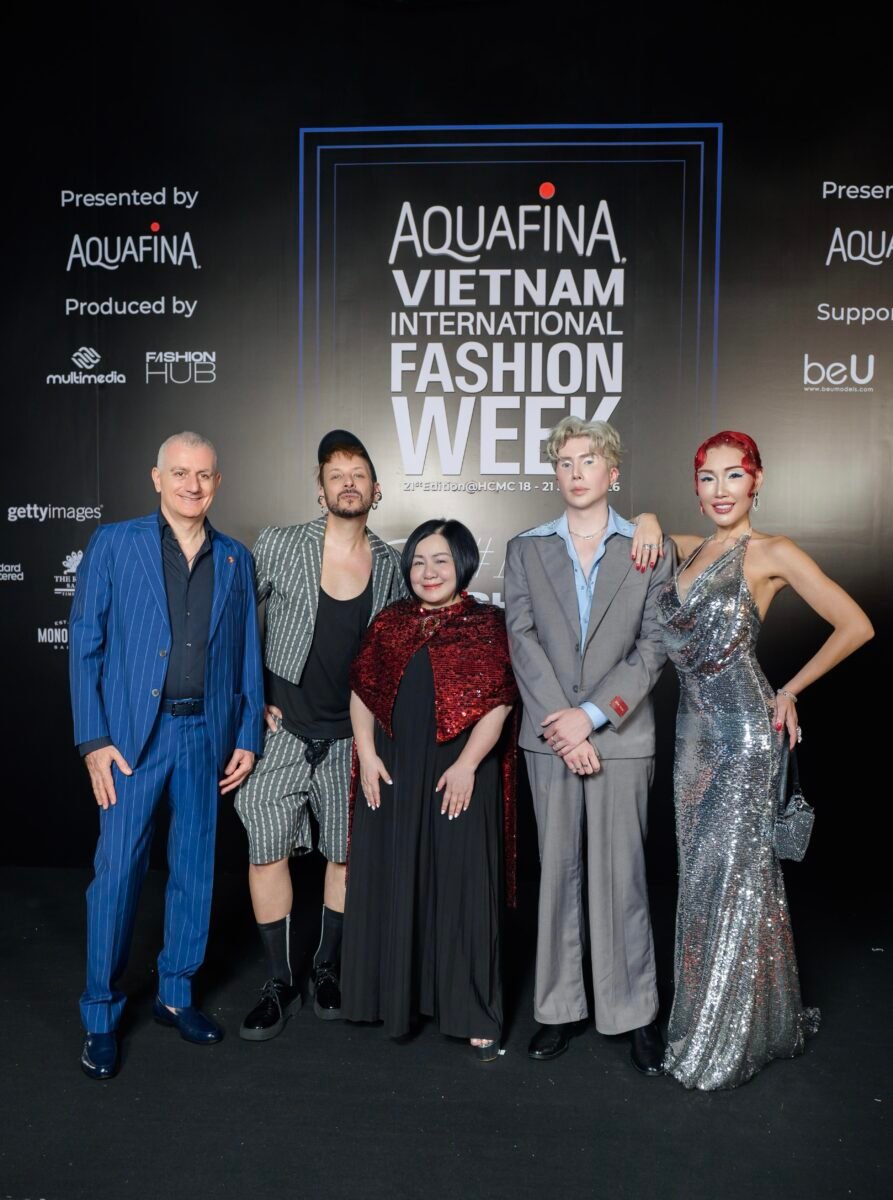
Dress Like a Spy: Inside Aquafina Vietnam International Fashion Week 2026 — “Pure Fashion in Motion”
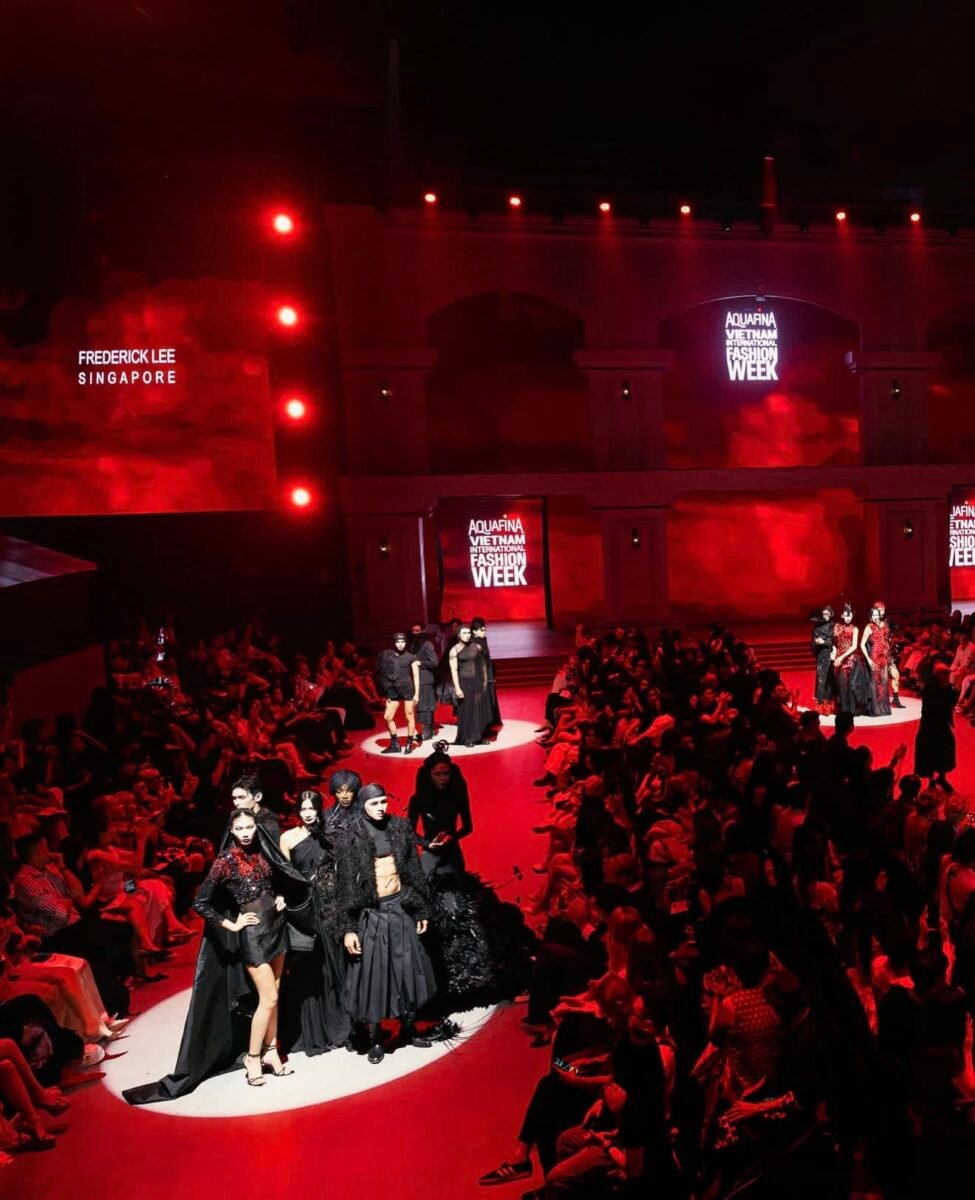
There is a particular kind of silence that falls over a room right before the lights drop and the first model steps out. I know that silence. I lived inside it for years, in rooms far less glamorous than this one — where stillness wasn’t aesthetic, it was survival. Ho Chi Minh City gave me that silence again.
From June 18 to June 21 Vietnam became the epicenter of something rare: a fashion week that didn’t just show clothes, it staged a philosophy. Aquafina Vietnam International Fashion Week — now in its 21st edition, sponsored by Aquafina — has quietly become one of the most disciplined showcases in the region. Twice a year, without fail, it returns. And this season’s theme, “Pure Fashion in Motion,” wasn’t just decoration. It was a fantasy world turned into reality.
Under the direction of Madam Trang Le, president of Vietnam International Fashion Week, the program brought together fifteen designers — ten Vietnamese, five international — into a single, unbroken conversation about movement, restraint, and reinvention.
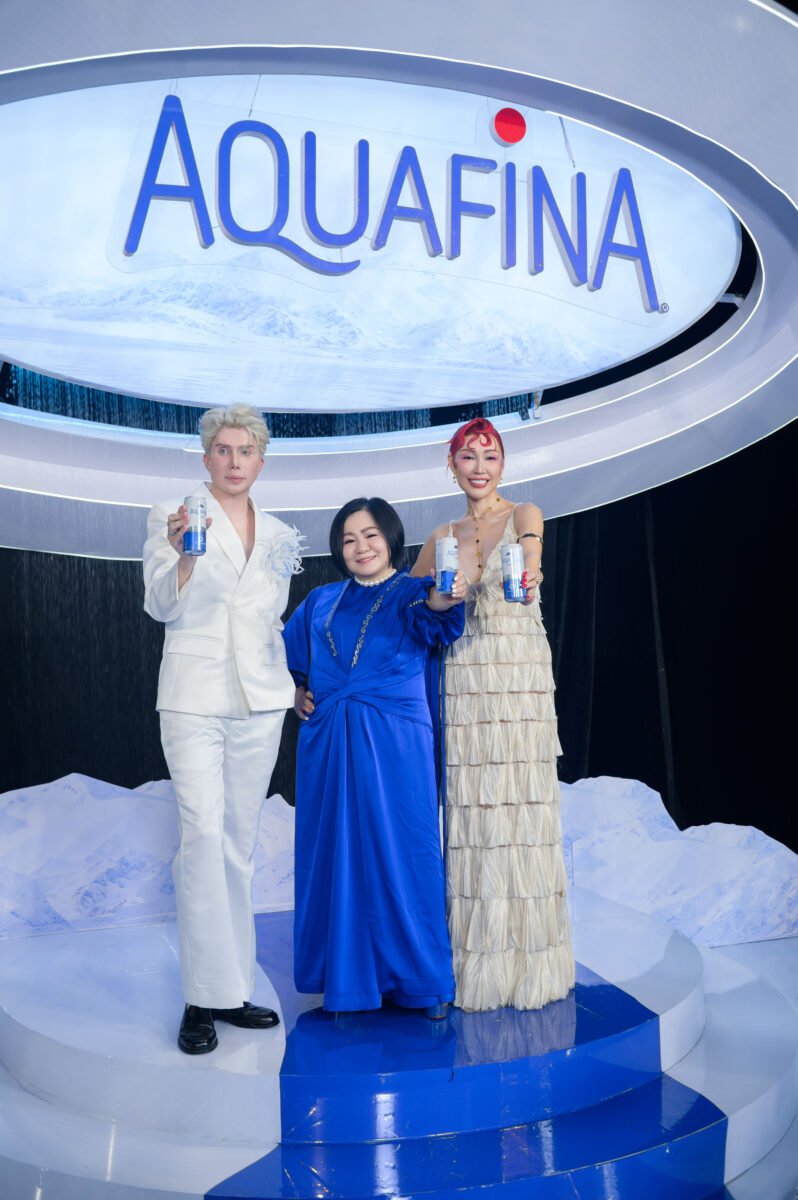
Vietnamese fashion, I realized watching it unfold, is no longer asking permission to belong on the global stage. It is simply taking its seat.
AVIFW brought together an influential international audience, including editors-in-chief, creative directors, and renowned fashion journalists from leading publications such as Vogue Singapore, ELLE Vietnam, L’Officiel, and Harper’s Bazaar. The Editor-in-Chief of Harper’s Bazaar Vietnam is Tran-Nguyen Thien-Huong.
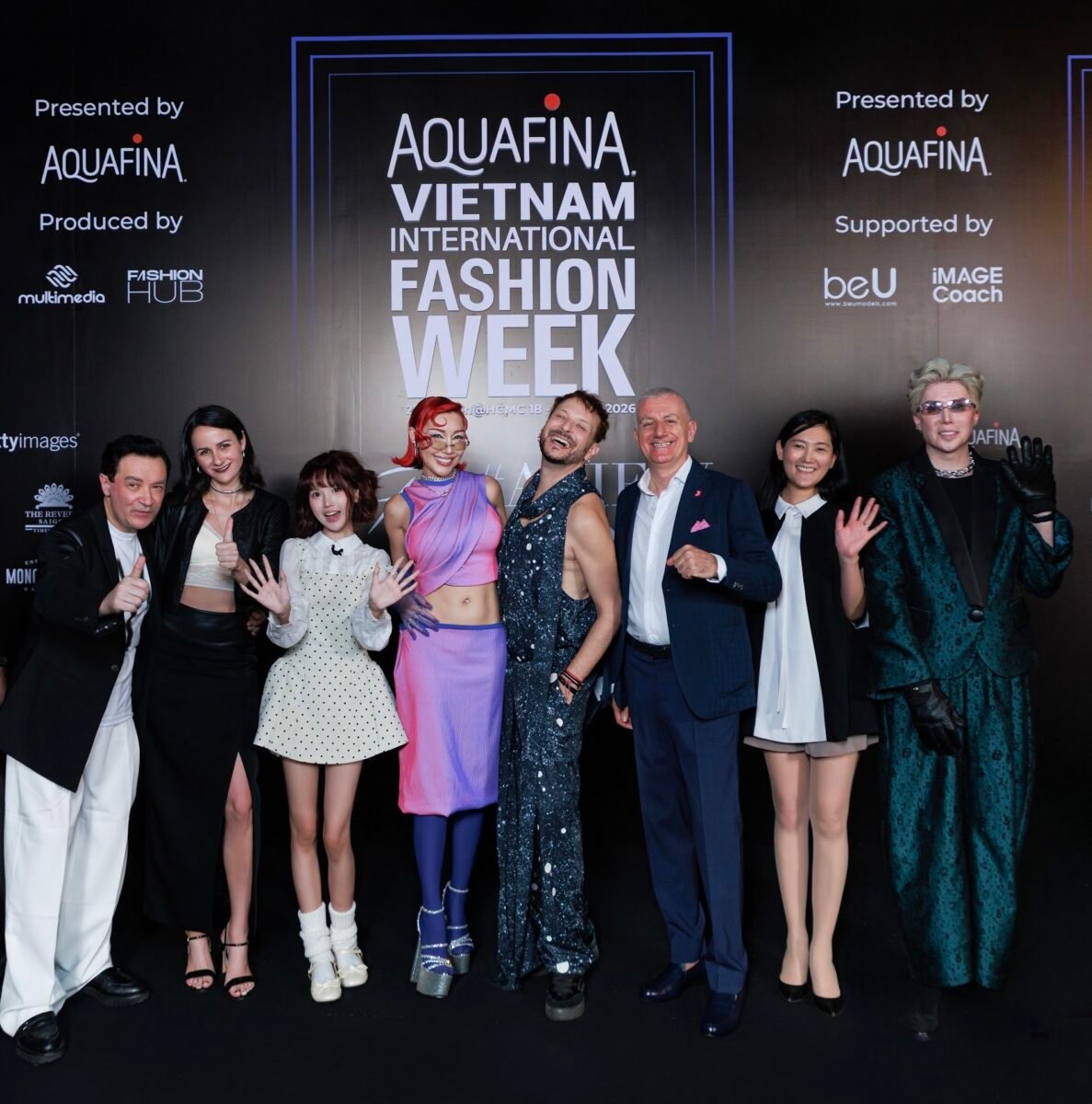
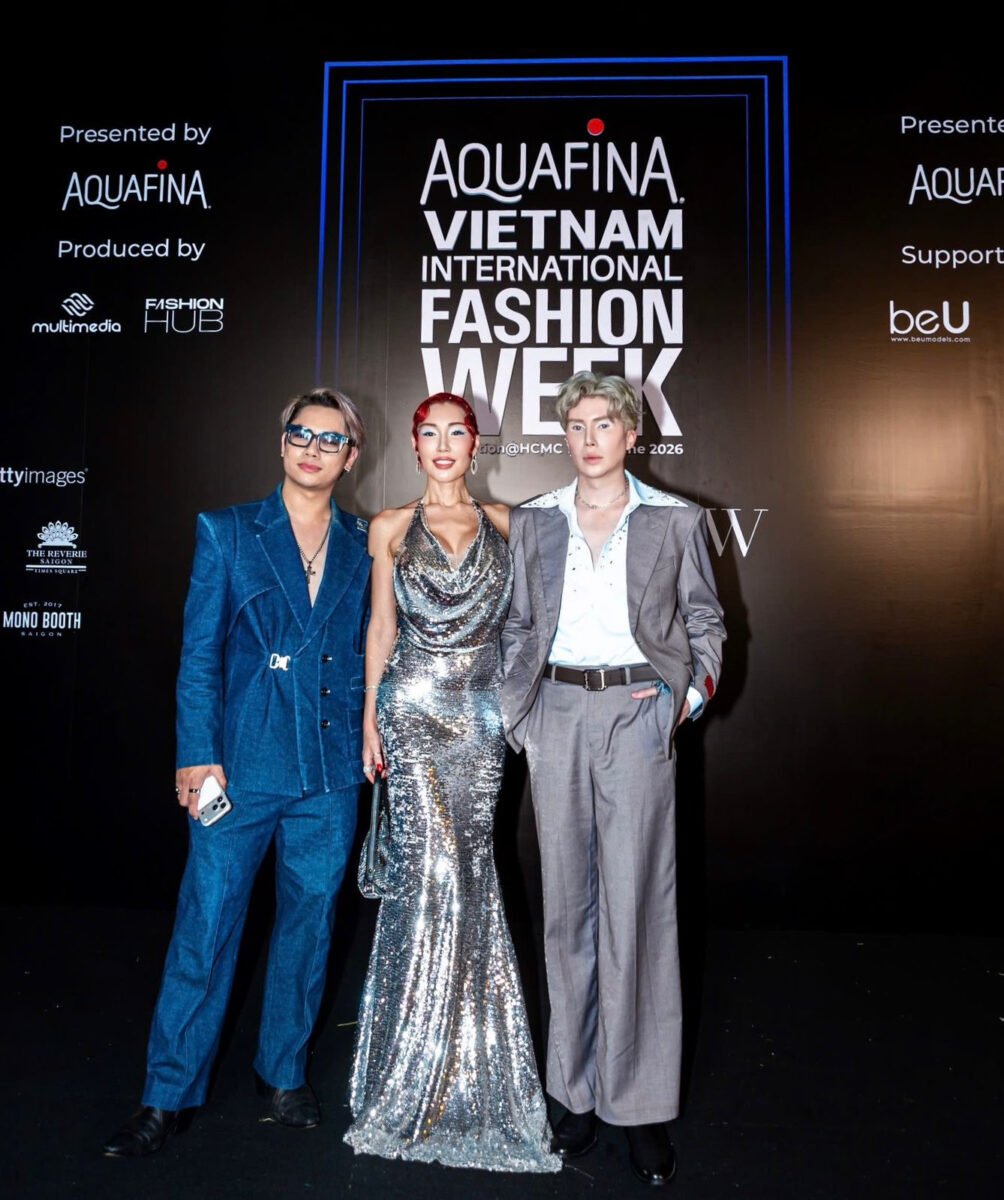
The event was also honored by the presence of representatives from various Consulates General in Ho Chi Minh City, alongside some of Vietnam’s most celebrated celebrities, including singer Toc Tien, Ho Quynh Huong, popular boy bands such as UPRIZE and OGG, hottest movie stars, prominent fashion influencers and Khang Le — the Head of VIP & Celebrity manager, founder of KSIMA.
Among the international guests this season was Oli London, the British K-pop influencer and author, who attended the week alongside me — adding his own distinct voice to a crowd already fluent in reinvention.
The Local Guard
Adrian Anh Tuan. Dang Trong Minh Chau. Thao Nguyen. Minh Tuan. CEM. Kelbin Lei’s Nobody Knows. Do Manh Cuong. Tom Trandt’s Moi Dien. DAS Studios. DINH. Ten names, ten very different instincts — some rooted deep in heritage, some cutting toward something sharper and more contemporary. Together they made the case that Vietnamese design doesn’t need to imitate the West to compete with it. It only needs to keep its own nerve.
The International Five
Five guests, five different fashion capitals, one stage. Angelo Cruciani from Italy. Slingstone and Chung Chung Lee from Korea. Frederick Lee from Singapore. TANDT from Thailand. Each one a different dialect in the same global language.
Angelo Cruciani: leather, latex, and a kind of confidence you can’t fake.
I have to slow down here, because this one is personal.
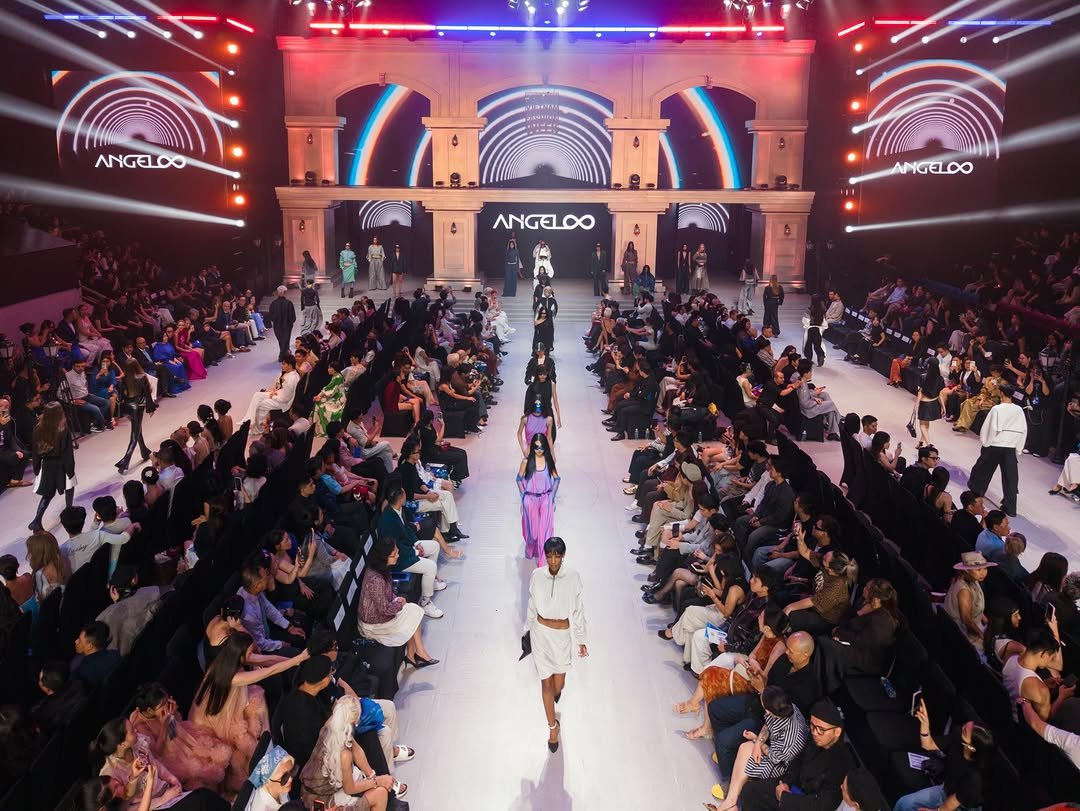
I first met Angelo years ago, backstage at a show in Milan — long before Netflix made the rest of the world fall for him through that leopard look on Next in Fashion. Even then, before the cameras found him, he had that thing you can’t manufacture: total certainty in his own hand. Watching him present his Angeloo label here, in Vietnam, supported by the Italian Consul General Alessandra Tognonato, producer Claudio Barbieri and Michele D’Ercole — former Italian Chamber of Commerce in Vietnam Chairman and now Chairman of Vietnam Asia Council — it didn’t feel like a coincidence. It felt like a circle closing.
This collection wasn’t loud in the way you’d expect from a designer this confident. It was sport stripped of apology and rebuilt as seduction. Black latex suits moved down the runway with the precision of a uniform — not fetish, armor. Pink stretch dresses paired with tailored black suits softened that armor just enough to make it human. And the jewelry — hand-finished in silver by jewelry designer Peter — didn’t accessorize the look so much as punctuate it, like the full stop at the end of a sentence you weren’t expecting to end so soon.
I wore the pink suit myself that night. I won’t pretend otherwise. It is, without exaggeration, one of the most quietly powerful things I’ve put on in years — seductive without asking to be looked at, comfortable without giving up an inch of presence. That’s the rarest combination in fashion. Most designers can give you one or the other.


Frederick Lee: McQueen’s Ghost, Reimagined in Lace and Leather
And then there was Frederick Lee.
I’ve sat front row at an Alexander McQueen show in London, years ago, and I didn’t expect to feel that particular chill again — that sense of watching something operatic rather than commercial. But Lee found it. Black gowns, feather, lace, leather, stitched together with a production and a score that understood exactly when to go quiet and when to swell.
It wasn’t imitation. It was inheritance — McQueen’s instinct for drama filtered through a Singaporean haute couture sensibility, sharpened rather than softened. Every model who walked that runway looked like she’d already won an argument no one else knew they were having.
The Takeaway
What AVIFW 2026 proved, season after season, designer after designer, is something I learned long before I ever covered fashion: confidence is not a costume. It’s a decision, repeated daily, until it becomes a posture.
Vietnam didn’t import this fashion week. It built it — patiently, deliberately, season by season — until the rest of the world had no choice but to show up.
And when they did, the silence wasn’t empty. It was earned!