
Vienna 1900: The Birth of Modernism and the Unseen Legacy of Emilie Flöge
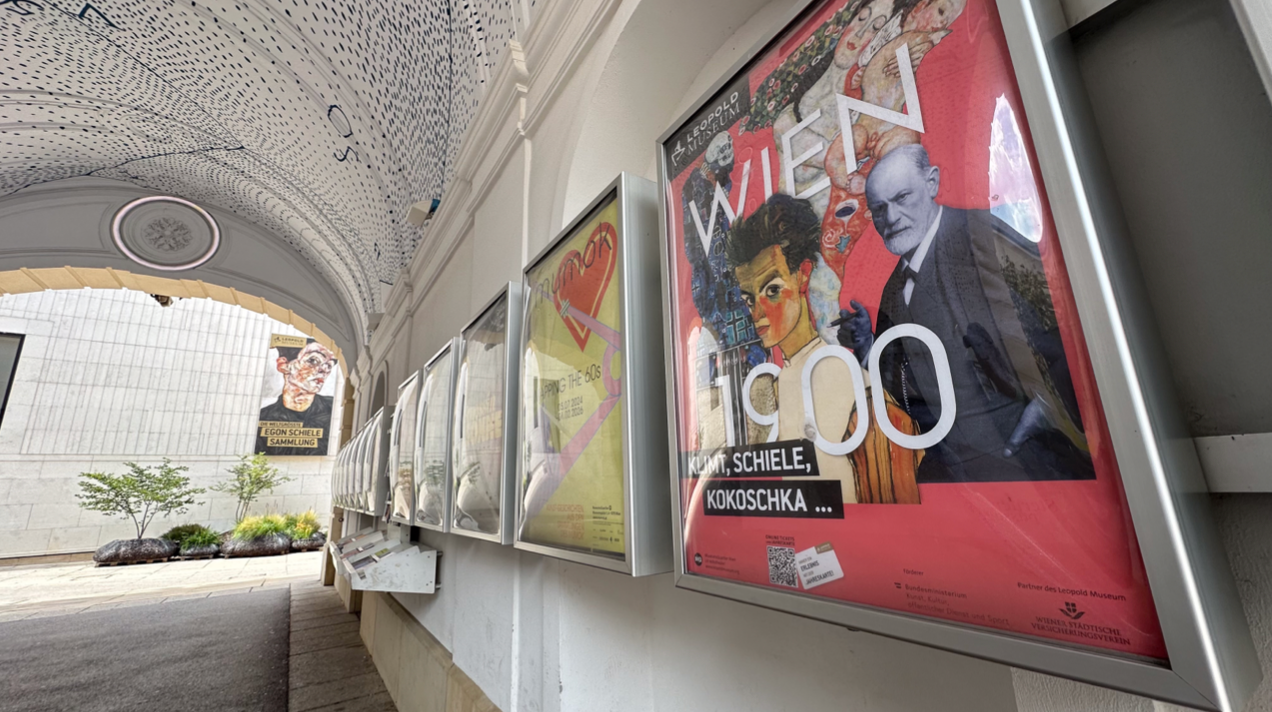
The early years of the 20th century were marked by growing calls for autonomy from various ethnic groups within the Austro-Hungarian Empire, as well as the devastation and loss of life caused by World War I, leading to the Empire’s eventual dissolution. Vienna, the capital city, became a hub for socioeconomic and political changes across all social classes, with rebellion and revolution dominating discussions and challenging long-standing traditions. There was a strong longing for the stability of the past, while at the same time, a fervent desire for the excitement and innovation of the future.
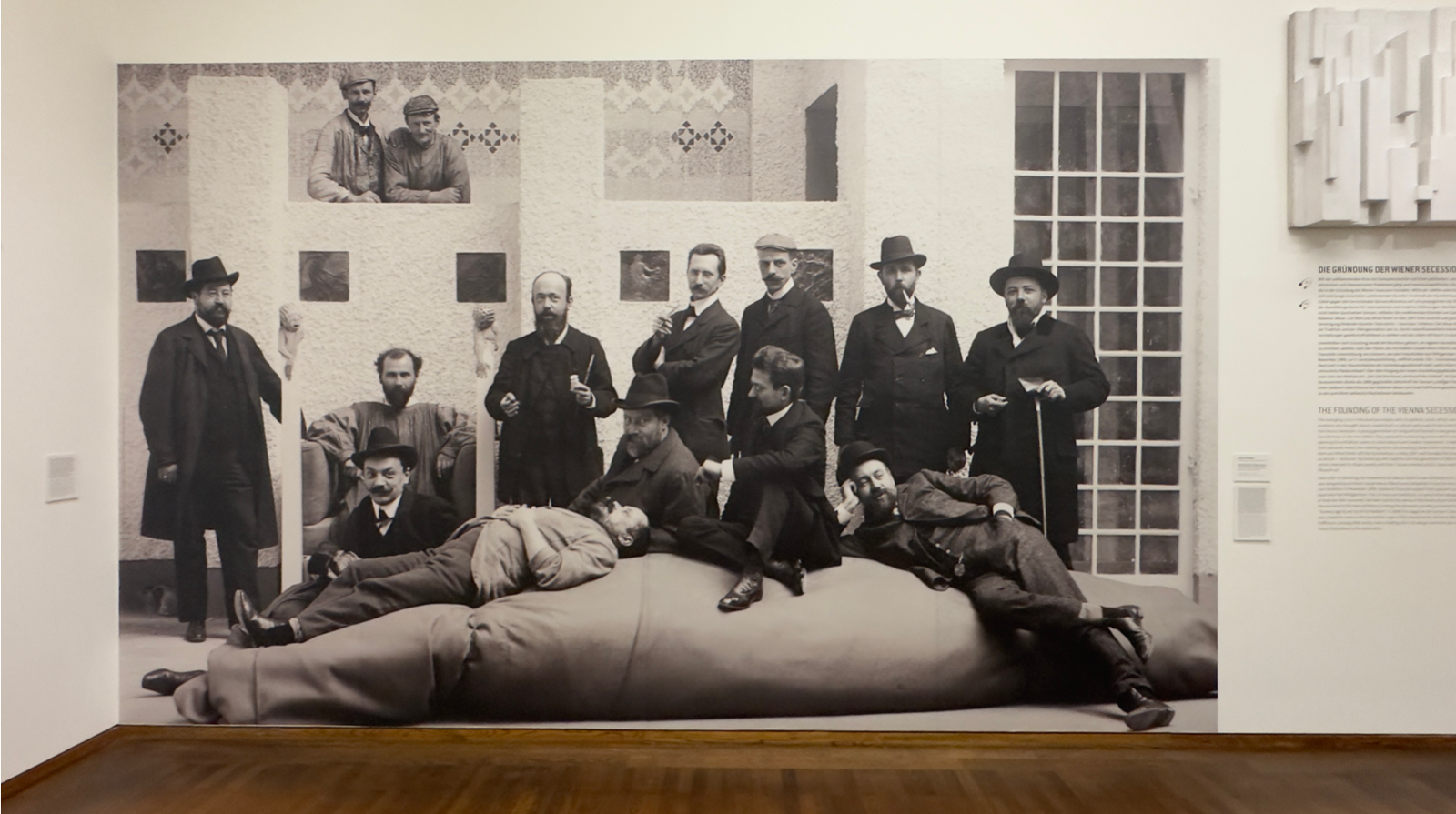
In response to the changing times, many in the arts, design, and cultural sectors began to question the dominance of traditional styles and sought new forms of expression that would reflect the shifting landscape of Vienna.
In 1897, a group of artists and architects broke away from the established Künstlerhaus to establish the Vereinigung Bildender Künstler Österreichs, also known as the Vienna Secession. This movement in architecture and art embraced geometric abstraction and decorative floral designs in the Jugendstil, or Art Nouveau style, prevalent in German-speaking regions.
To promote their ideas, the Secession group launched an official magazine called “Ver Sacrum” in 1898 and built the Secession building in 1897 as an exhibition space for their work. The Wiener Werkstätte, founded in 1903, was an association of artists whose work in the applied arts paved the way for the Bauhaus movement. Collaborating with Vienna’s architects, members of the Werkstätte aimed to create complete works of art, known as Gesamtkunstwerk, that encompassed living spaces, including architecture, furnishings, lighting, and everyday utensils.
The culture of Viennese modernism flourished as a result of specific historical events and the distinct Austrian mindset. This culture exhibited both unifying and divisive tendencies, as artists and writers in Vienna cultivated a dynamic and traditional environment. Within this culture, individuals and the world were able to undergo transformation.
Viennese modernism maintained its identity through internal competition, fostering adaptability and vitality commonly. This movement integrated unique philosophies by figures such as Ernst Mach, the psychology of Sigmund Freud, the architecture of Otto Wagner, and the paintings of Gustav Klimt, Egon Schiele and Koloman Moser, the music of Anton Bruckner and Gustav Mahler, as well as theatrical contributions, also played crucial roles in shaping this distinctive socio-cultural model in Europe during the late 19th and early 20th centuries.
During a period of disconnection from German politics, Viennese modernism discovered its unique identity, giving rise to the study of Austrian culture. Austrian studies delve into historical, typological, and mental aspects, striking a balance between national and European identities that is crucial for modern European integration.
The “Vienna 1900. Birth of Modernism” exhibition showcases masterpieces that serve as a testament to an extraordinary era that forever altered the course of art history.
Stepping into the Leopold Museum, visitors are transported back in time to an era marked by artistic brilliance and groundbreaking discoveries. The exhibition is not only a journey through art but also an exploration of the human spirit and its ability to prevail over adversity through the transformative power of art.
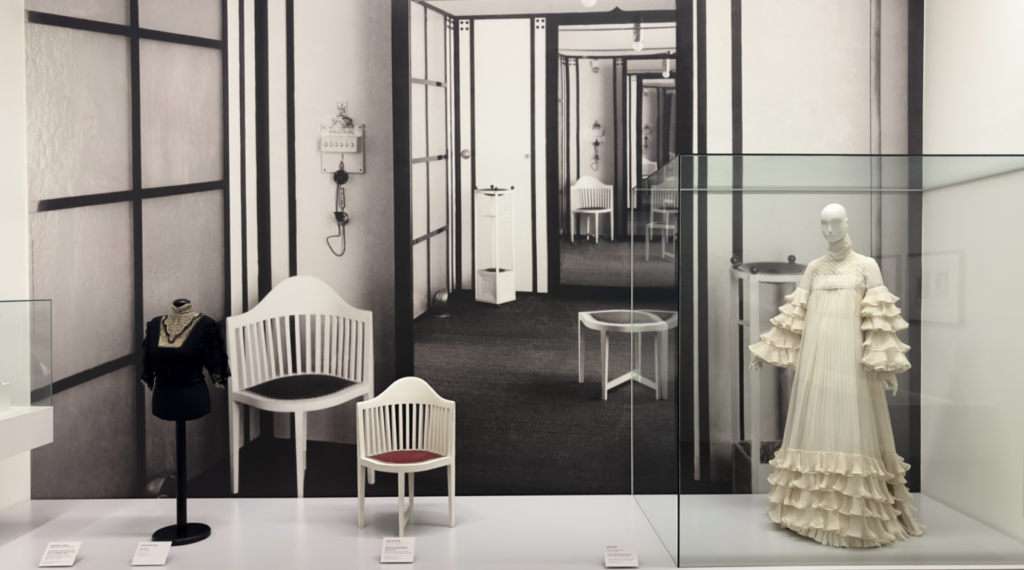
Among the highlights of the exhibition are Gustav Klimt’s works, displayed in a room adorned with a wall-sized black-and-white photograph, a reproduction of a dress behind a glass showcase, a biography, and other items dedicated to Emilie Flöge, the muse and life-long companion of Gustav Klimt.
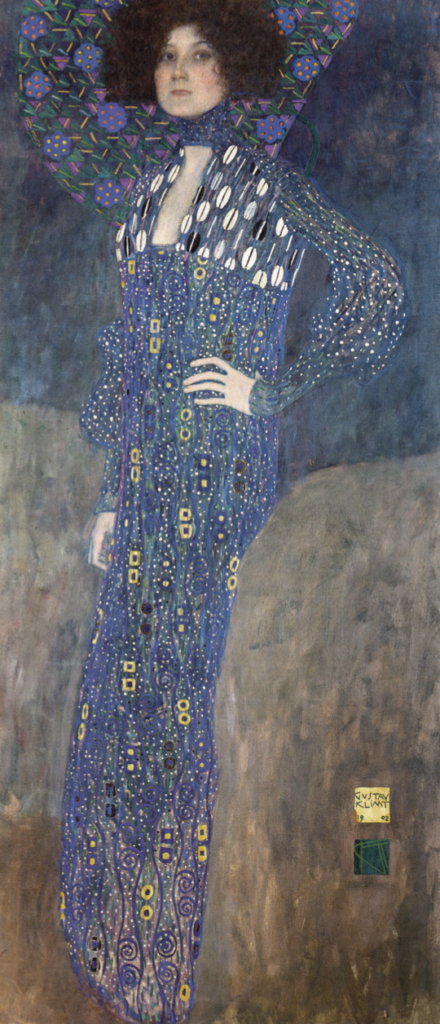
Emilie Flöge was born in Vienna in 1874, one of three daughters of a wood carver. In 1892 trough her sister Helene’s wedding with Klimt’s brother Ernst, she became Gustav Klimt’s sister-in-law. Soon after the marriage, Ernst died, leaving Gustav Klimt to assume guardianship of her newborn niece. Gustav often visited his brother’s house and from 1897 and on, Gustav and Emilie became inseparable.
As a business woman, Emilie Flöge was one of Vienna’s most successful fashion stylists and designers. In 1904, together with her sisters, she opened the couture house Schwestern Flöge (Flöge Sisters) in Vienna. The Schwestern Flöge became successful and thrived for 34 years.
Inspiration from her collection of folk art, costumes, and japanese textiles gave her a head start when it came to rethinking women’s dress. She rejected the confines of the traditional Victorian corsets and restrictive dresses that plagued women’s fashion at the time which now linked her into the early feminist circles of Vienna.
Her Reform dresses, crafted from flowing fabrics and embracing loose-fitting silhouettes, not only liberated women from the oppressive corsets but also inspired a new wave of artistic expression.
These dresses became synonymous with the modernist movement in Austria, capturing the essence of freedom and individuality within the constraints of her society.
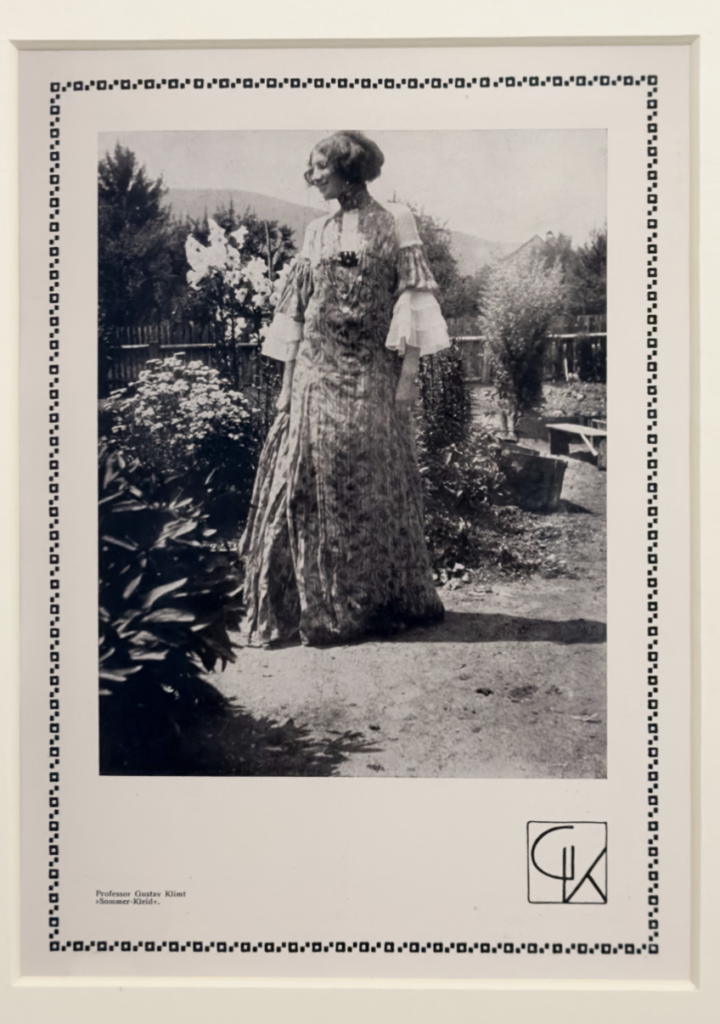
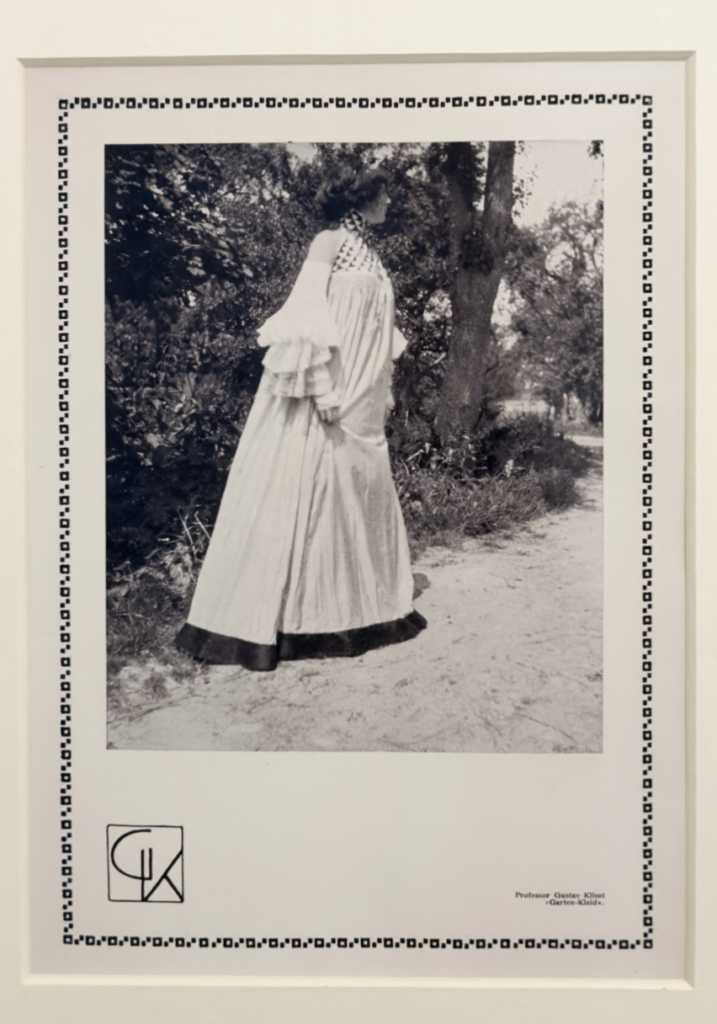
It is uncertain to what extent Klimt was involved in the development of clothing for the “Flöge Sisters” salon. However, clothing was a key element in all of his works. In his preliminary sketches, he carefully selected various wardrobe choices and often improvised directly on the canvas, creating intricate patterns with his brush.

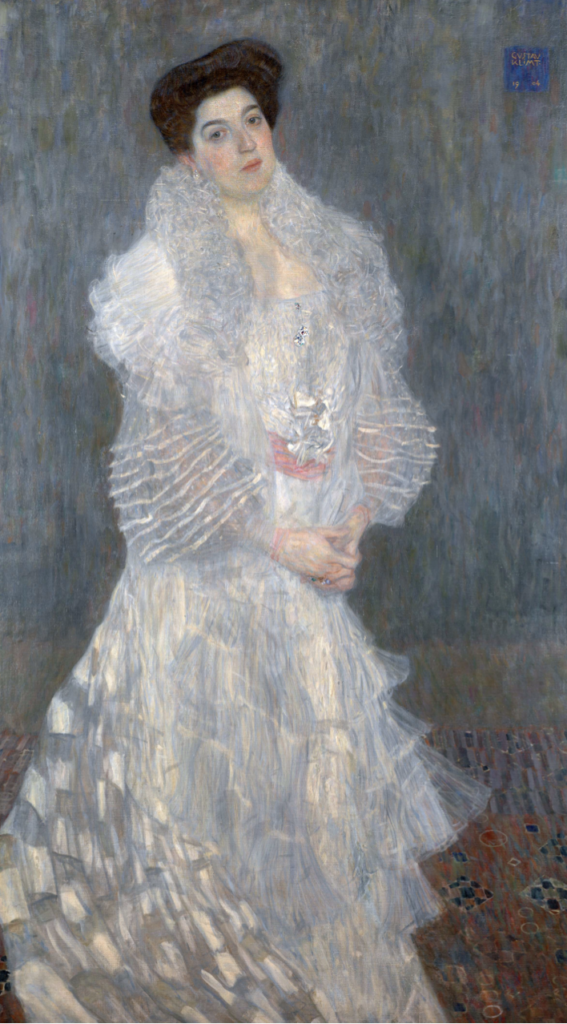
One known instance of Klimt’s fashion design is the dress he created for Hermine Gallia (1876-1936), who wore it while sitting for a portrait. Additionally, Klimt crafted a light, airy dress model for Emilie, demonstrating his talent in fashion design.
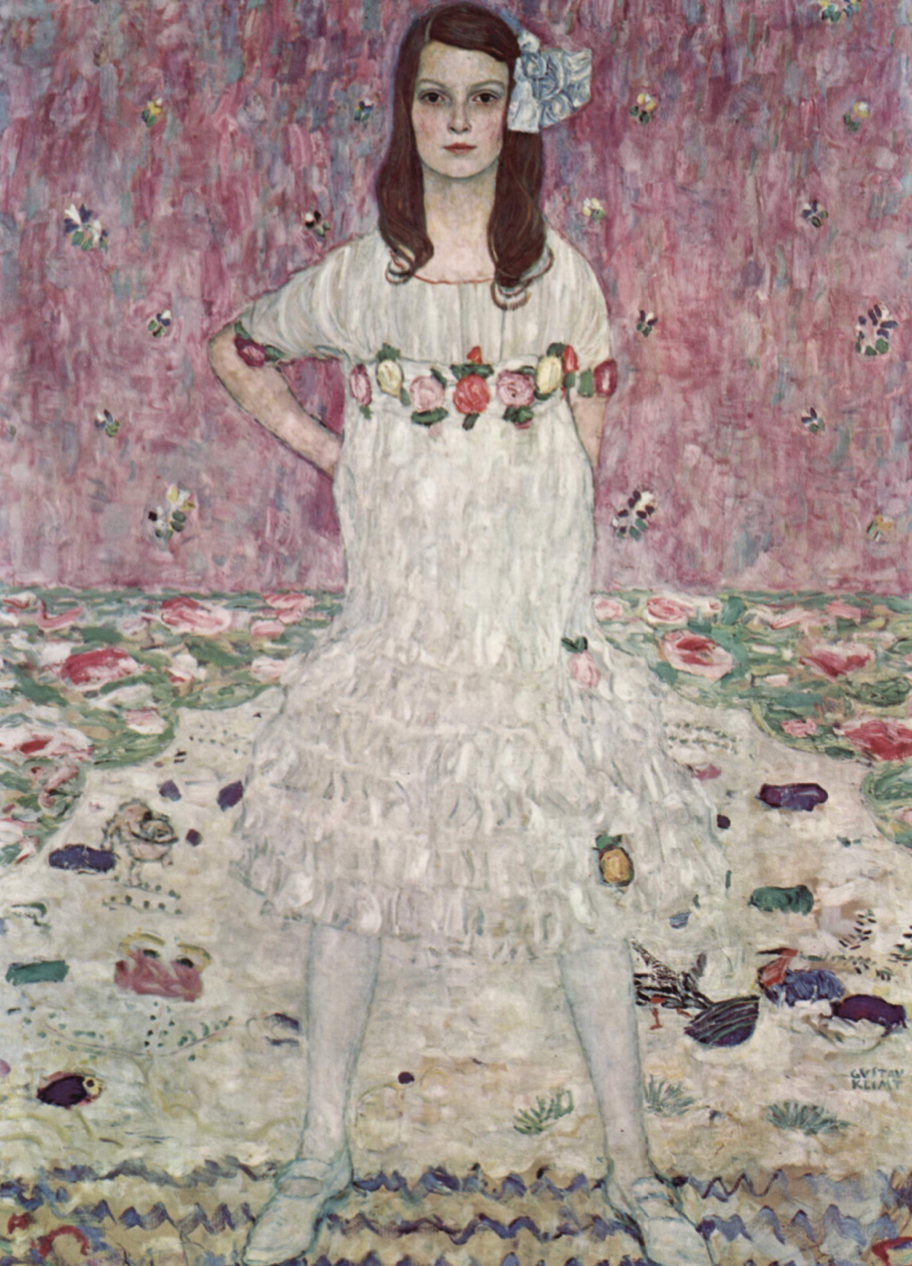
Emilia crafted a dress for the portrait displayed below, designed for a nine-year-old girl named Meda Primavesi (1903-200). The idea was suggested by Klimt, the artist. It is worth noting that Klimt seldom depicted children or elderly women in his work. Nonetheless, one of his portraits features Emilia’s very own mother.
Many art critics speculate that the woman depicted kneeling in Klimt’s renowned masterpiece “The Kiss” is actually Emilie Flöge herself, serving as a poignant tribute to their love.
As Klimt lay on his deathbed, twenty years senior to Flöge, he uttered his final wish to see her one last time, requesting, “bring me Emilie.” This request illustrated the profound impact Emilie had on Klimt’s life and artistry, as she was the last image he sought to gaze upon before departing this world.
Emilie Flöge’s designing, sewing and producing work garments is often overlooked, treated as a peripheral component of Klimt’s legacy.
Even her grave on the protestant cemetery was only discovered in 2006, by an english hobby-researcher.
Emilie was not just a muse of Gustav Klimt and the inspiration behind some of his most celebrated works but also a powerhouse in her own right, challenging the stereotypes of the era with her avant-garde ideas, a person whose influence ran deeper than the pigment of a painter’s brush in the artistic landscape of 1900s Austria.