
This Summer at the Grimaldi Forum Monaco: “Monaco and the Napoleons: Intertwined Destinies”
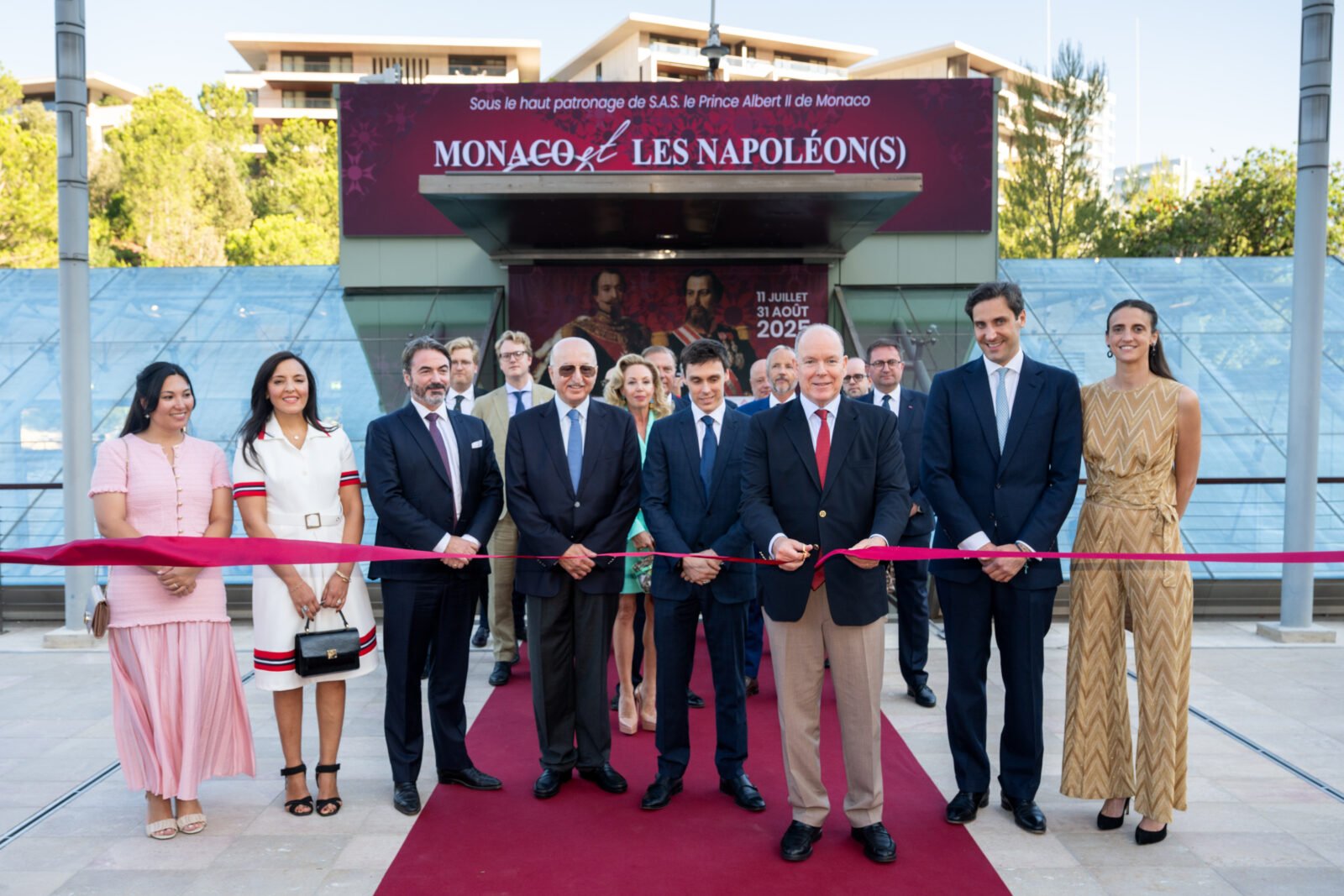
This summer, the Grimaldi Forum Monaco unveils a landmark cultural event: “Monaco and the Napoleon(s): Intertwined Destinies”, an exhibition that delves deep into a century of connections—political, familial, and cultural—between the Bonaparte dynasty and the House of Grimaldi.
This exhibition, curated by Pierre Branda, Scientific Director of the Napoléon Foundation, along with Thomas Fouilleron and Thomas Blanchy, Director and Deputy Director of the Archives and Library of the Prince’s Palace of Monaco, offers a fresh, well-researched perspective on a key moment in European and Monegasque history—when Napoléon I, Napoléon III, Joséphine, and Eugénie intersected with the Grimaldi dynasty.
A key highlight of the exhibition is the exceptional private collection of David and Mikhail Iakobachvili. Collectors for over two decades, their passion for rare objects, Napoleonic artifacts, and French decorative arts has shaped this remarkable showcase. Their deep connection to Monaco and commitment to cultural heritage helped bring Monaco and the Napoleons: Intertwined Destinies to life.
Louis Ducruet, ambassador of the exhibition, brings a modern perspective to this key chapter in Monaco’s history. Monaco and the Napoleons offers a unique chance to rediscover the Principality’s ties to the Napoleonic era—a highlight of summer 2025 blending scholarship and heritage.
“Passionate for many years about the figure of Napoleon I, I have always been intrigued by the contrasting role played by the Bonaparte dynasty in the destiny of the Principality.”
— Louis Ducruet
The exhibition brings together nearly 200 objects, many never before shown to the public. The display includes rare artworks, intimate personal items, and historic documents that highlight an unexpected yet profound relationship between Monaco and France’s imperial dynasties.
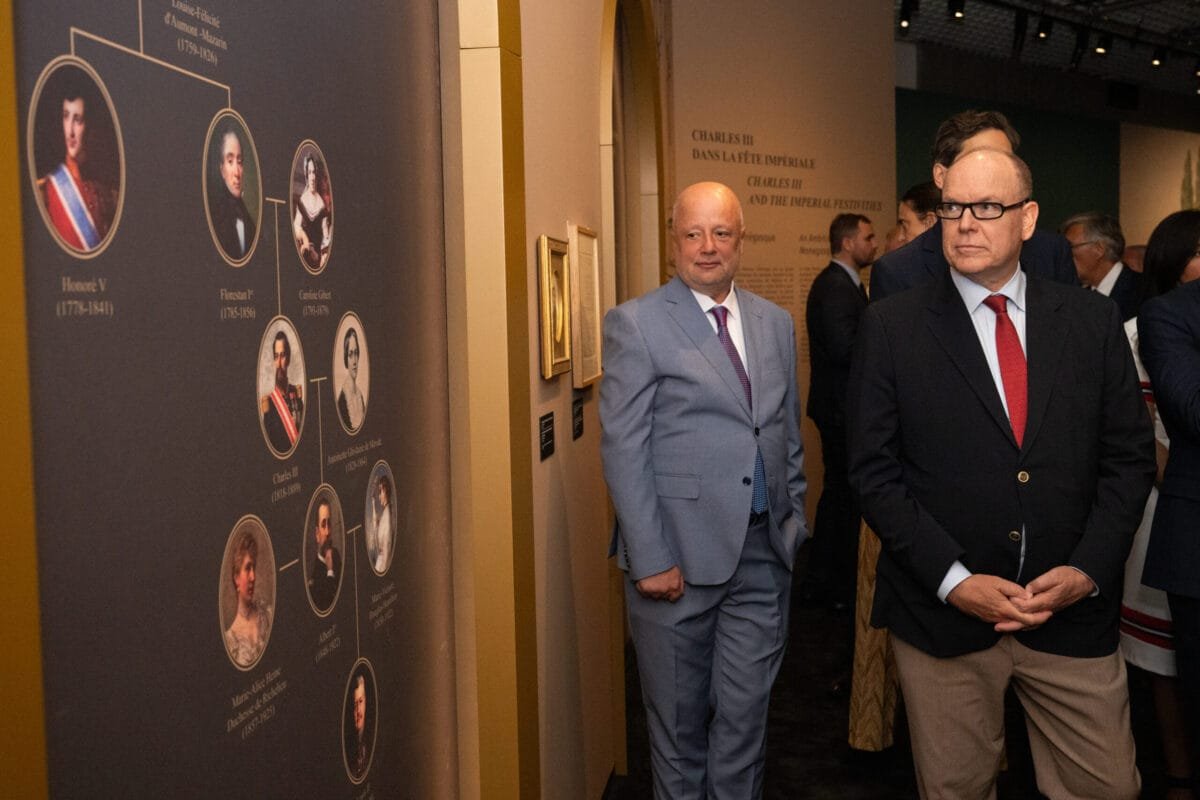
Following the French Revolution, Monaco disappeared from the map—annexed by France in 1793. But its fate remained tightly bound to the Bonapartes. Under Napoleon I, the Grimaldis lost their sovereignty; under Napoleon III, they regained it and found the path to modernization.
“Without the Napoleons, modern Monaco would likely not exist.”
— Pierre Branda, Napoleon Foundation
This fascinating story unfolds chronologically and thematically—from battlefield alliances to intimate courtly connections. Visitors will learn how Honoré V of Monaco served as Grand Equerry to Joséphine, and how Prince Albert I was raised under the affectionate eye of Empress Eugénie, who called him her “godson of the heart.”
From La Malmaison to Monte Carlo
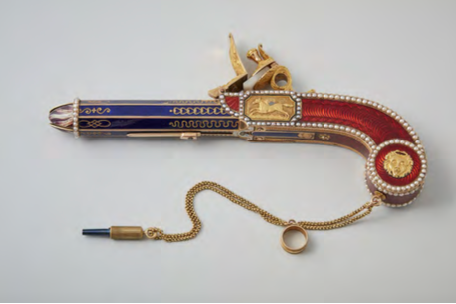
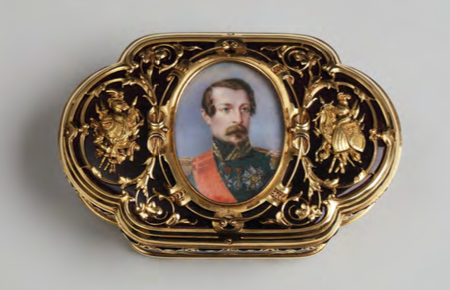
The exhibition vividly evokes the grandeur and intimacy of the Imperial palaces. Jewelry once worn by Joséphine, ornate snuffboxes, ceremonial regalia, thrones, and original documents illustrate both personal lives and national destinies.
A standout highlight is a bird clock, a spectacular automaton similar to one Joséphine treasured at La Malmaison. It is not only a technical marvel but a poetic symbol of the exhibition’s ambition: to breathe life into history.
The scenography captures a sweeping transformation—from Monaco’s erasure in 1793 to its rebirth through the 1861 Franco-Monegasque treaty, securing sovereignty and igniting an economic renaissance that birthed Monte Carlo’s casino, opera house, and glamorous aura.
According to Thomas Fouilleron and Thomas Blanchy, co-curators and historians of the Prince’s Palace, the exhibition offers a unique opportunity to explore Monaco’s identity in a new light:
“The Bonaparte legacy shaped Monaco’s institutions, diplomacy, and even its ceremonial traditions—like the Order of Saint-Charles, modeled after the Légion d’Honneur.”
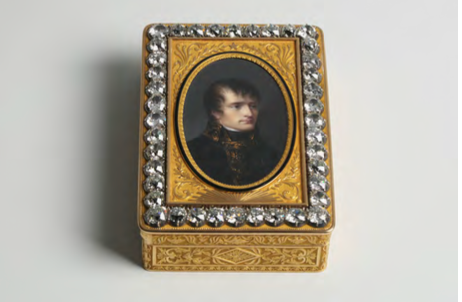
The exhibition begins with a moment out of a novel: the 1815 encounter between Napoleon and Honoré V at Golfe-Juan, just as Napoleon launched his audacious return from Elba. Later recounted by Alexandre Dumas, this meeting marks the beginning of the Principality’s unexpected imperial entanglement.
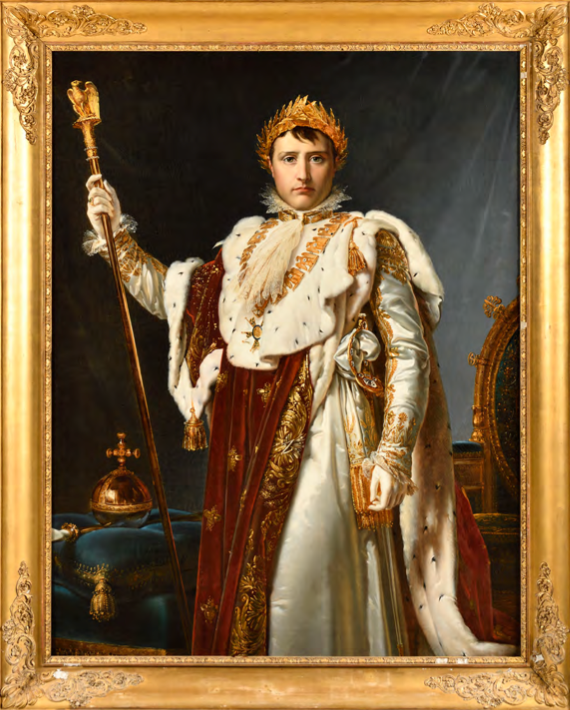
Revolution, Empire, and Sovereignty
Napoleon I owes his rise and glory to the French Revolution, while the Princes of Monaco suffered from it: losing sovereignty in 1793 when the Principality was annexed by France. Becoming French citizens, the Grimaldis served as soldiers in the Consulate and the Empire. The future Prince Honoré V became a Baron of the Empire and Joséphine’s Grand Equerry at Malmaison.
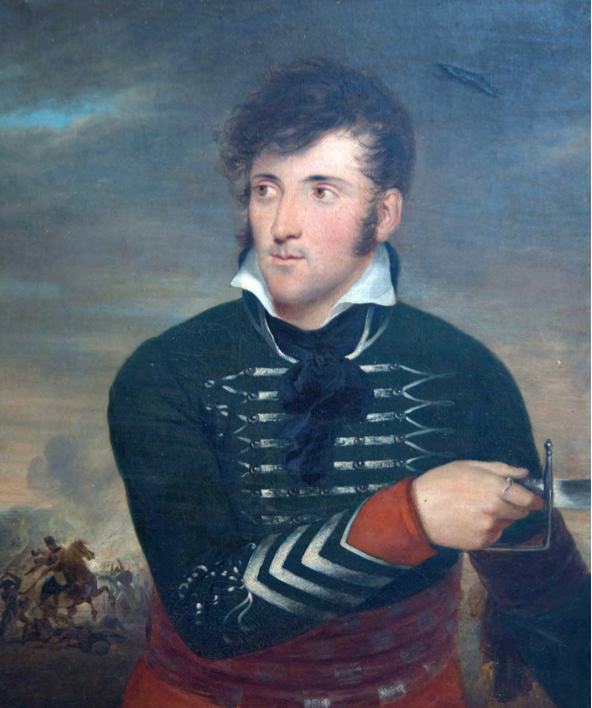
It wasn’t until Napoleon’s fall that Monaco regained its 1792 borders. When Louis-Napoleon Bonaparte was elected President of the French Republic in 1848, Monaco had just lost Menton and Roquebrune. Italy, on its path to unification, also eyed the tiny state. Napoleon III, seeking Nice for France, supported Charles III’s efforts to resolve the territorial dispute via compensation.
From his accession in 1856, Prince Charles III sought to endow Monaco with the full attributes of sovereignty. He established the Order of Saint Charles, issued national codes, adopted a flag and anthem, minted currency, and issued stamps. He also expanded Monaco’s diplomatic network and signed treaties on trade and extradition.
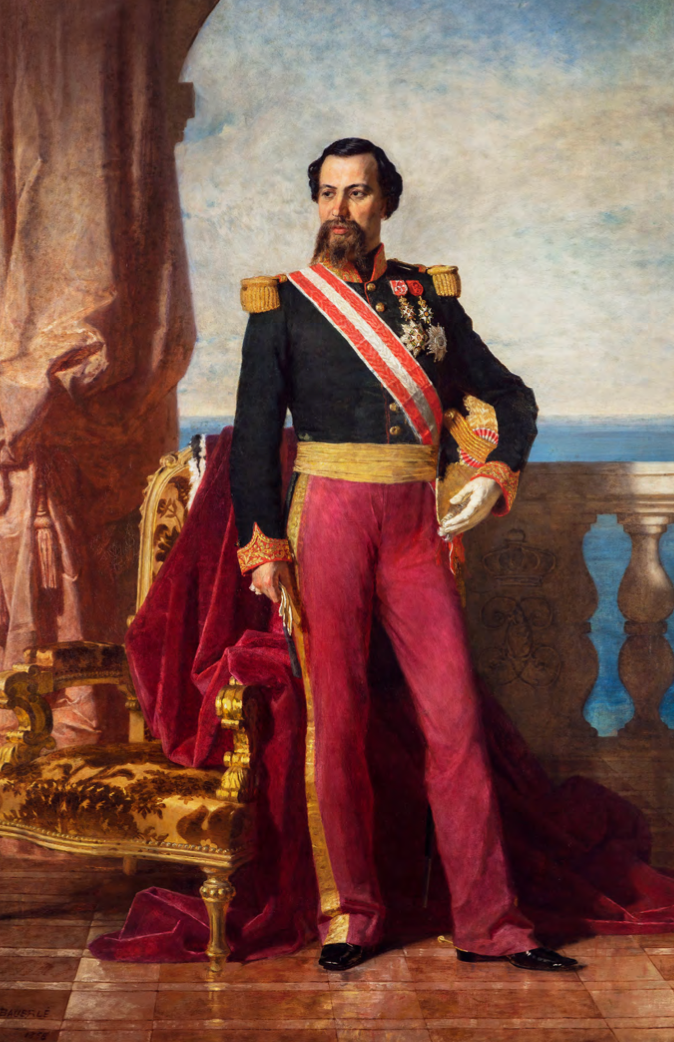
Charles III’s economic strategy—based on seaside tourism, winter leisure, and gambling—transformed Monaco into a favorite destination for Europe’s elite. In 1866, he gave his name to a new casino district: Monte-Carlo. The arrival of the railway in 1868 further boosted tourism, allowing Monaco to prosper and even abolish direct taxation by 1869.
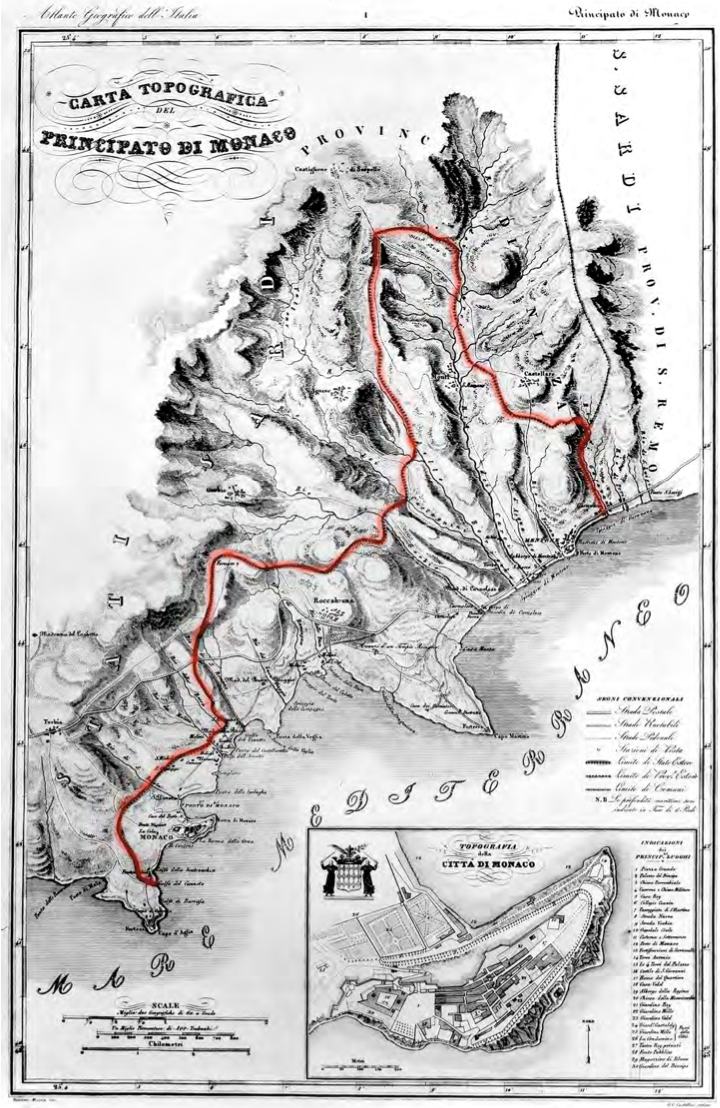
On February 2, 1861, a treaty was signed between Napoleon III and Charles III. In exchange for ceding Menton and Roquebrune to France, Monaco received 4 million francs and full sovereignty.
Two secret articles made France Monaco’s protective power and officially ended the Sardinian protectorate. Customs and postal conventions followed in 1865, securing the Principality’s new status.
In June 1869, young Prince Albert of Monaco met Napoleon III and Empress Eugénie. They arranged his marriage to Marie-Victoire Douglas-Hamilton, related to Napoleon III through the Beauharnais family.
The wedding contract was signed in Saint-Cloud with the Emperor and Empress present. The religious ceremony took place at the Château de Marchais on September 21, 1869. Though the union ended in separation, it symbolized the deep ties between the two dynasties.
The ties between the Bonapartes and the Grimaldis were also personal. Empress Eugénie frequently hosted her “godson of the heart,” Prince Albert I, at her villa in Cap Martin.
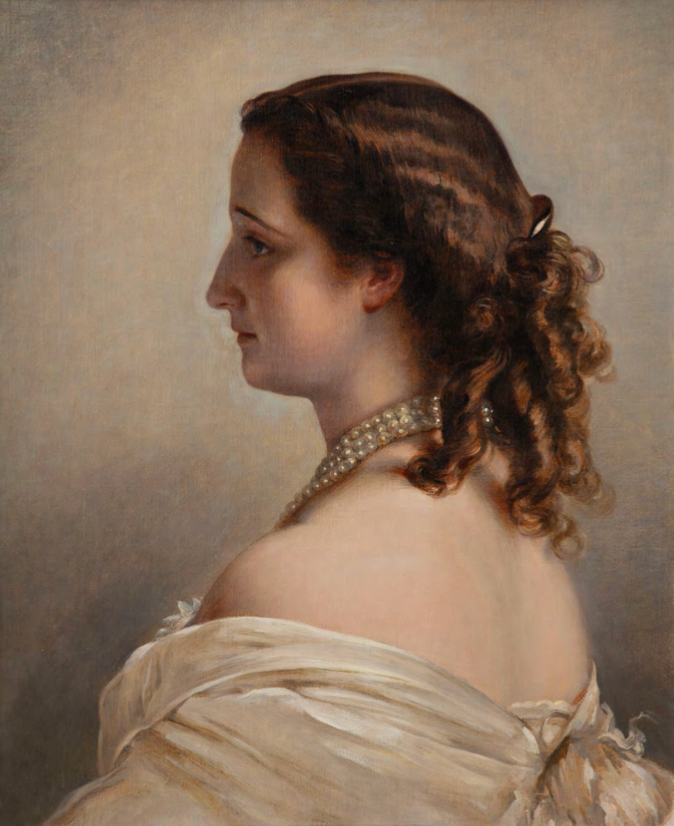
After 1870, the Grimaldi-led Monaco grows and thrives as a continuation of imperial grandeur and beyond, echoing the splendor of Napoleon III’s court. Now connected via the Corniche road and railway, the seaside resort boasts not only a casino but also an opera house.
After Napoleon III’s death in 1873 and the tragic loss of her son in 1879, Eugénie settled in England, later building Villa Cyrnos in Cap Martin. Dignified in her grief, surrounded by friends such as Prince Albert I, she remained intellectually curious and active in charitable works until her death in 1920.
Monte-Carlo: Legacy of the Second Empire
Albert I of Monaco (1848–1922), the “Scholar Prince,” developed a passion for the sea and science. He participated in naval expeditions that turned scientific, founding Monaco’s Oceanographic Museum (1910) and the Oceanographic Institute of Paris (1906). A progressive humanist, he supported Dreyfus and peace through international arbitration.

A New Capital of Science and the Arts
Under Albert I, Monaco flourished culturally. The Monte-Carlo Opera House, designed by Charles Garnier, opened in 1879. Director Raoul Gunsbourg, from 1892, turned it into a beacon of European opera, hosting works by Wagner, Debussy, Ravel, and more. In 1911, Diaghilev’s Ballets Russes premiered major ballets here.
Monaco’s cultural dynamism also encompassed theater, exhibitions, sports, and cutting-edge technology like aviation.
At its core, Monaco and the Napoleons is a story of human relationships—of affection, alliances, ambition, and resilience. It offers a new lens through which to understand the transformation of a tiny Principality into a sovereign, sophisticated, and sovereign state with a global profile.
General Curator: Pierre Branda, Scientific Director of the Fondation Napoléon
Deputy Curators: Thomas Fouilleron, Director of the Archives and Library of the Prince’s Palace of Monaco, and Thomas Blanchy, Deputy Director of the Archives and Library of the Prince’s Palace of Monaco.
Ambassador: Louis Ducruet
Organizer: Musée Collection des Arts – David and Mikhail Iakobachvili.
In collaboration with the Fondation Napoléon and the Library of the Prince’s Palace
Visitor Information
Location: Grimaldi Forum Monaco
Dates: From July 11 to August 31, 2025
Grimaldi Forum Monaco Ticketing
Tel: +377 99 99 3000
Email: ticket@grimaldiforum.com
Sales Outlets
www.montecarloticket.com, as well as Ticketmaster, France Billet, and via the Carlo app.